









How Drive-Up Storage Works
Drive-up units sit at ground level in rows of single-story buildings, each with its own roll-up garage-style door facing a driveway. You enter the facility through the gate, drive to your unit, open the door and carry belongings straight from your vehicle inside. There's no lobby, hallway, elevator or loading dock between you and your things.
Doors are commonly wide enough to carry a sofa or appliance through without tipping it, and ceilings are often a little taller than in indoor units. Your lock secures the door, while the facility handles the gate, lighting and cameras. Access hours depend on the facility, and some offer extended or 24-hour gate access.
Pros and Cons of Drive-Up Storage
The biggest advantage is convenience. Loading a whole moving truck is much faster when you can back it up to the door, and quick visits to grab a tool or swap seasonal gear take minutes. Drive-up units are also usually more affordable than climate controlled indoor units of the same size.
The main drawback is exposure. Without heating and cooling, a drive-up unit gets hot in summer and cold in winter, and humidity can build up inside. Dust and rain can also blow in when the door is open. Some people also prefer the extra layer of security of a unit inside a locked building.
| Consideration | Drive-up unit | Indoor unit |
|---|---|---|
| Loading a moving truck | Easiest | Carts, halls or elevator |
| Frequent visits | Quick in and out | Longer walk |
| Temperature and humidity | Follows the weather | Steadier, often climate controlled |
| Typical price | Often lower | Similar, or higher with climate control |
What to Store in a Drive-Up Unit (and What Not To)
Drive-up units shine for durable belongings that are heavy, bulky or used often. These are the most common:
- Furniture and boxes during a move or home renovation.
- Appliances such as washers, dryers and refrigerators, cleaned and fully dry.
- Tools, tool chests, ladders and contractor equipment.
- Lawn mowers, grills, patio furniture and garden equipment.
- Bikes, kayaks, camping gear and sports equipment.
- Business inventory, displays and supplies that come and go by van.
Keep belongings that are sensitive to heat, cold or moisture, such as photos, documents, electronics, instruments and fine wood or leather furniture, in a climate controlled unit instead, or at least packed in sealed bins and raised off the floor.
Example: a weekend move with a rental truck
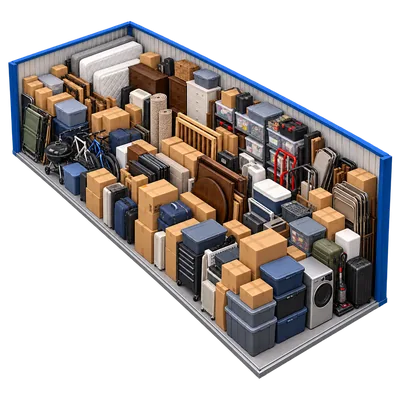
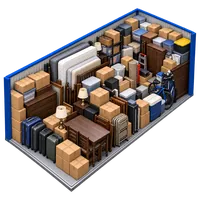
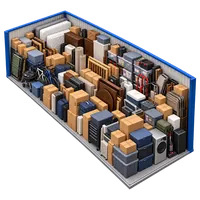
If you're between homes and have one weekend with a rental truck, a drive-up 10x15 or 10x20 lets you back the truck to the door, unload appliances and heavy furniture first along the back wall, then stack boxes toward the front. When the new home is ready, you reverse the process without carrying anything down a hallway.
Choosing a Drive-Up Unit
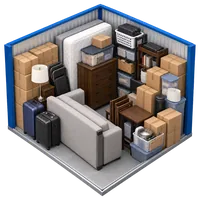
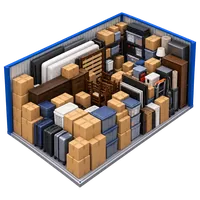
Start with size. Drive-up units are most common in medium and large sizes, so a 10x10 is often the smallest drive-up option. If you're not sure how much space you need, our storage calculator can estimate it from a list of items or photos.
Then check access. Ask whether a moving truck can reach and park in front of the unit, how wide the door is and whether the driveway has room to turn around. Confirm gate hours if you'll visit early or late, and whether vehicles may be stored in the unit if that's part of your plan.
Ask about the door side
Units facing a busy main driveway are easy to reach but can be harder to load during peak times. A unit on a quieter row can make moving day smoother.
Loading a Drive-Up Unit
Plan the layout before the truck arrives. Load appliances and the heaviest furniture first against the back wall, then work forward with boxes and lighter pieces, keeping anything you'll need soon closest to the door. Leave a narrow aisle if you plan to visit often. Pallets or shelving keep items off the floor, which helps if rain blows in when the door is open.
Clean and dry everything before it goes in, drain fuel from mowers and other small engines, and prop appliance doors slightly open to prevent odors. Use breathable covers on furniture rather than tight plastic, and finish with a strong disc or cylinder lock. For more help, see the storage unit size guides or our guide to renting a storage unit.
Frequently Asked Questions About Drive-Up Storage
What is a drive-up storage unit?
A drive-up unit is a ground-floor storage unit with its own exterior roll-up door. You can park your vehicle directly in front of it and load or unload without going through a building, hallway or elevator.
Are drive-up storage units climate controlled?
Usually not. Most drive-up units open to the outdoors and aren't heated or cooled, so they follow outside temperatures more closely. A few facilities offer climate controlled units with exterior doors, so ask if you need both.
Is drive-up storage cheaper?
Drive-up units are often priced similar to standard indoor units of the same size and usually cost less than climate controlled units. Prices vary by city, facility and demand, so compare current rates near you.
Can a moving truck pull up to a drive-up unit?
At most facilities, yes, that's the main appeal. Driveway width and turning room vary, so if you're renting a large moving truck, ask the facility whether it can reach and park in front of your unit.
Can I store a car in a drive-up unit?
Many facilities allow cars and motorcycles in drive-up units, typically a 10x20 or larger. Expect to show registration and proof of insurance, and see our car storage guide for preparation tips.
What shouldn't I keep in a drive-up unit?
Items that are sensitive to heat, cold or humidity, such as photos, documents, electronics, musical instruments and fine wood furniture, are better off in climate controlled storage. Hazardous materials, flammables, food and anything alive are prohibited at storage facilities.
Are drive-up units secure?
Drive-up units are usually inside a gated facility with keypad access and cameras. Because each door faces the driveway, a strong disc or cylinder lock is a good idea. Ask about lighting, gate hours and on-site management.
Can I work out of a drive-up unit?
Storage units generally can't be used as a workshop, office or living space, and most facilities don't provide power in drive-up units. Loading, unloading and organizing are fine; check the rental agreement for the facility's rules.
What size drive-up unit do I need?
Drive-up units come in most standard sizes, commonly from a 10x10 to a 10x25 and larger. Try our storage calculator or the size guides to find the right fit.
 (888) 218-0157