













Why Students Use Storage
Every spring, dorms close and students have to move out, often only to move back in a few months later. Driving or shipping everything home and back takes time, money and space in a family car. A small storage unit near campus lets you leave most of your things where you'll need them next year and travel light.
Summer isn't the only reason. Students studying abroad, taking an internship in another city or moving between off-campus apartments with a gap between leases all use storage to bridge the time in between.
- Store dorm furniture and bedding instead of hauling them home.
- Keep belongings safe during a semester abroad or co-op term.
- Cover a gap between the end of one lease and the start of the next.
- Hold onto furniture you plan to use in an apartment next year.
What Size Storage Unit Do Students Need?
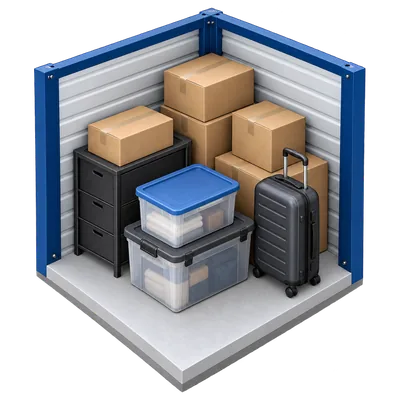
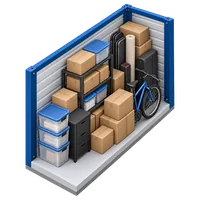
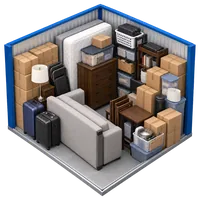
Most dorm rooms empty into a surprisingly small space once everything is boxed. Bins, drawers, bedding, clothes and a mini-fridge usually fit in a 5x5. Off-campus students with real furniture, like a bed frame, couch or desk, need more room.
How to Pack a Dorm Room for Storage
Start sorting a week or two before finals. Set aside what you'll take home, what you'll store and what you can donate or sell. Use sturdy boxes or plastic bins of similar size so they stack safely, and put heavy items like books on the bottom. Clothes and bedding travel well in vacuum bags or sealed tubs.
Clean and dry everything before it goes in, especially mini-fridges, microwaves and anything that held food. Wrap electronics in towels or their original packaging, and keep cords together in labeled bags. Take valuables such as laptops, passports and financial documents with you.
Example: storing for a semester abroad
If you'll be overseas for the fall, you may not be back for four or five months. Choose a unit you or an authorized friend can reach easily, pack winter clothes on top so they're easy to grab when you return, and consider climate control if you're leaving electronics or a mattress through the summer heat.
Timing Around Move-Out Week
Move-out week is busy for everyone. Units near campus and rental trucks can be in high demand, so reserve your unit a few weeks ahead. Ask about the facility's access hours, since a late final or a dorm check-out deadline may leave you only a short window to load.
If you won't be in town on move-out day, see whether a friend or family member can be added as an authorized user to load or unload for you. Some students also coordinate with roommates so one person handles the drop-off while the others finish exams.
Plan the return trip too. Put the items you'll need first, like bedding and a lamp, closest to the door. If your move-in date is set by your school, check that the facility will be open that day and that your rent is paid through the right month.
Keeping College Storage Costs Down
Prices vary by city, facility and unit size, and demand near campus can rise at the end of the semester. To keep costs reasonable, store only what you'll actually use next year, choose the smallest unit that fits without crushing boxes and consider sharing with roommates. Selling or donating bulky items you can easily replace, like an old futon or a cheap shelf, can let you drop down a size. Ask whether the advertised rate is introductory, whether there's an admin fee and what the move-out notice period is so you don't pay for an extra month. For more on how renting works, see our storage units guide.
Frequently Asked Questions About College Storage
What size storage unit do I need for a dorm room?
Can roommates share a storage unit?
Many facilities allow it, and sharing can make a larger unit more affordable. One person usually signs the rental agreement, so agree in advance on how rent is split and who holds the key. Some facilities let you add an authorized user.
When should I reserve summer storage?
It's wise to reserve a few weeks before finals. Small units near campus can be in high demand at the end of the spring semester, and booking early gives you more choice of size and location.
How long can I rent a storage unit for the summer?
Many facilities rent month to month, so you can rent for the summer months and move out when classes start. Check the agreement for the move-out notice period so you don't pay for an extra month.
Can I store a mini-fridge?
Usually yes. Empty it, defrost it, clean it and let it dry completely with the door propped open to prevent mold and odors. Check the facility's rules about appliances before you store it.
Should I store my mattress?
If you own your mattress, you can store it, but mattresses can absorb moisture and odors. Use a breathable mattress cover and consider climate controlled storage if you'll be away all summer in a hot or humid area.
What should I not put in storage?
Don't store food, flammable items, or anything prohibited by the facility. Keep laptops, passports, financial documents, medications and other valuables with you rather than in the unit.
Do I need insurance for college storage?
Many facilities require coverage or offer a protection plan. Your parents' homeowners policy or your own renters policy may extend to items in storage, so check before buying extra coverage.
Can someone else pick up my things?
Many facilities let you add an authorized person to your account, such as a parent or friend, who can access the unit with their own gate code. Ask the facility how to set this up before you leave.
 (888) 218-0157