The right moving supplies do not have to be expensive or elaborate. They simply need to protect your belongings and make boxes safe to lift, stack, transport, and unpack. Many moving problems begin with flimsy cartons, too little padding, mislabeled boxes, or the assumption that one roll of tape and a few trash bags will be enough for an entire home.
Start by assessing the rooms and unusual items you need to move. Buy or borrow supplies for those actual contents, then add a small margin for the final packing day. This avoids both last-minute shortages and a closet full of unused moving materials afterward.
Choose boxes by weight and purpose
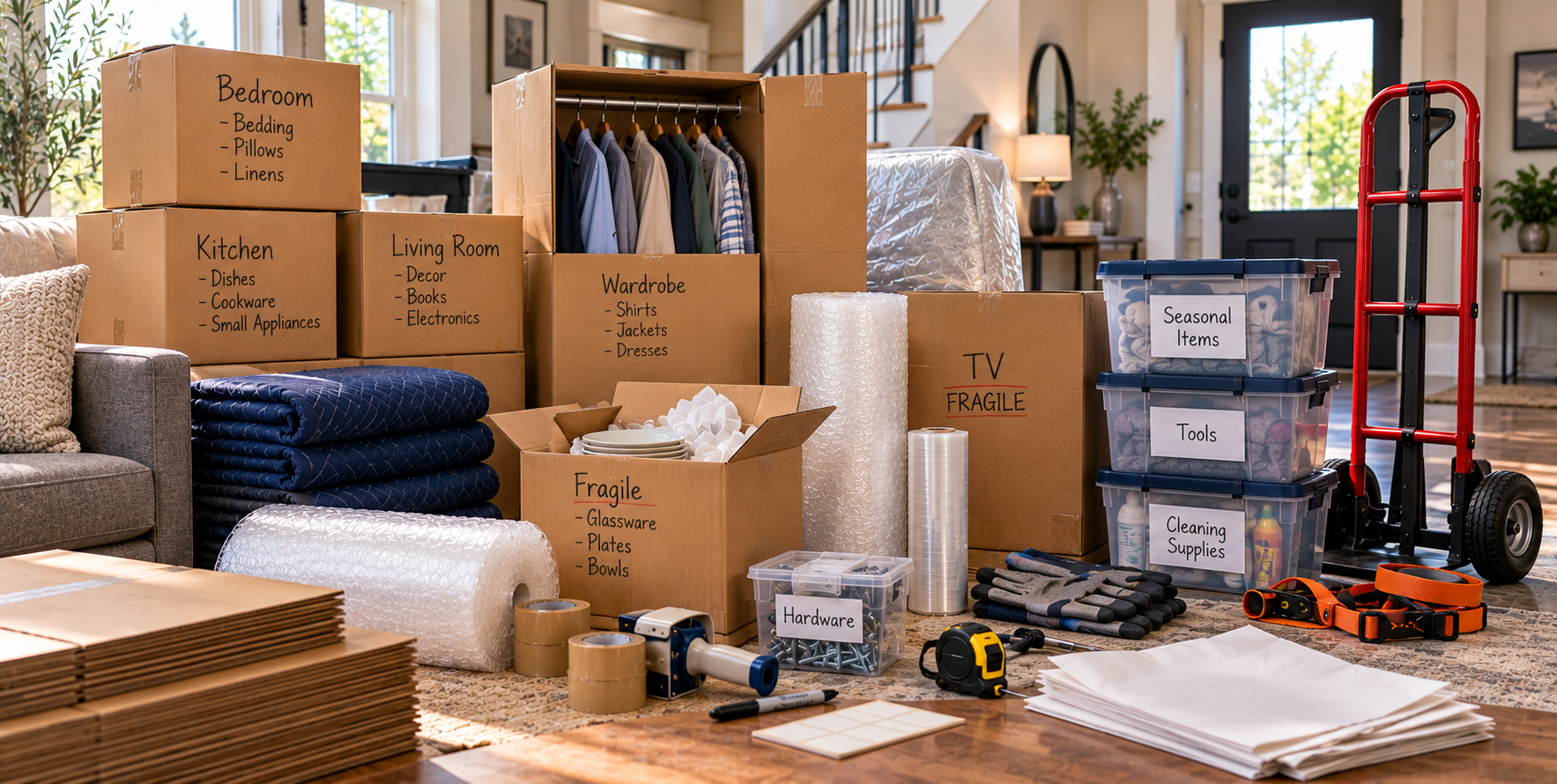
Small boxes are best for dense items such as books, dishes, tools, and pantry equipment that can be moved safely. Medium boxes work for many household goods, while large boxes are more suitable for lightweight items such as bedding or pillows. Avoid filling an oversized carton entirely with books or cast-iron cookware. A box that looks efficient while empty can become unsafe once loaded.
Wardrobe cartons, dish packs, television cartons, and other specialty containers can be worthwhile for items that are awkward or fragile. If you reuse boxes, inspect corners, bottoms, and signs of moisture damage before trusting them with valuable contents. Whatever the box size, reinforce it appropriately and do not leave sharp objects loose inside.
Understand the packing materials that actually help
Packing paper is useful for wrapping dishes and filling small gaps. Bubble cushioning or similar protective materials may help with certain fragile objects, but it should not rest directly against every delicate finish or antique. Moving blankets provide impact protection for furniture. Corner protectors, stretch wrap used appropriately over protective layers, and mattress bags can help prevent scratches and dirt during transport.
Do not assume all protective materials can remain on an item indefinitely. Some plastics may trap moisture during long-term storage, and adhesives can mark furniture or finishes. If items are moving directly into a storage unit, choose packing that will be suitable not only for the truck ride but also for the full storage period.
Get the basics for closing and labeling boxes
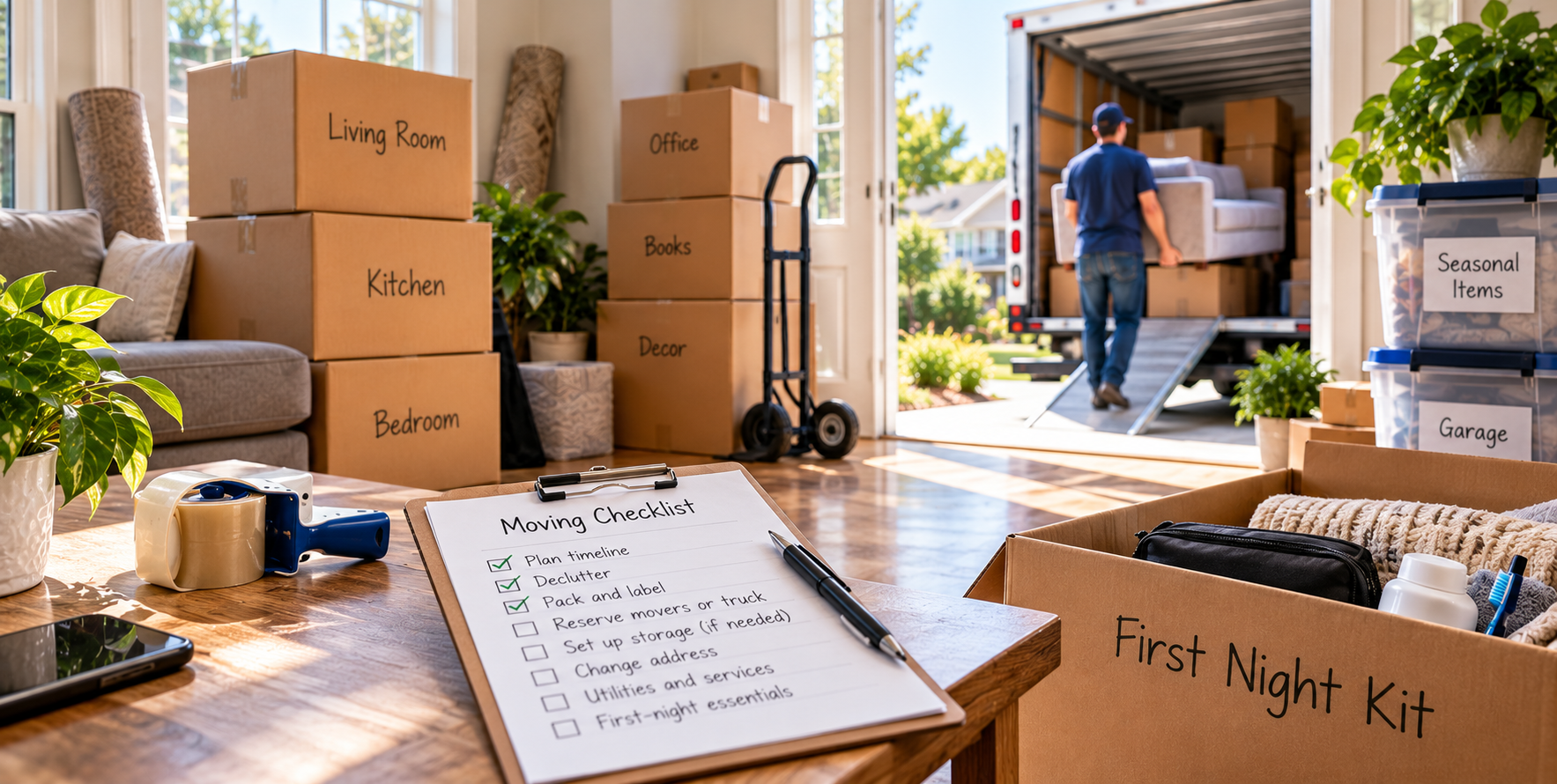
You will need reliable packing tape, a dispenser or cutter, permanent markers, and labels or a simple numbering system. Write the room, general contents, and box number on at least two sides. The number can correspond to a digital inventory, which is especially useful if some boxes go into storage while others go directly to the new home.
Make your labels useful rather than decorative. “Kitchen — dishes — box 3” is better than “fragile.” Add “open first” or “heavy” where it will help with unloading, but pack fragile contents properly even when the box is marked. Keep a master list on your phone rather than storing the only copy with the boxes.
Supplies for furniture and appliances
Prepare furniture with padded blankets, straps, appropriate covers, and protective materials for legs or corners. Disassemble items only when it is safe and helpful to do so, then place hardware into labeled bags. A tool kit with suitable screwdrivers, wrenches, and a measuring tape can prevent delays on moving day. Avoid attaching tape directly to wood finishes or delicate surfaces.
For appliances, use manufacturer instructions for disconnecting, defrosting, draining, and transporting. A hand truck, appliance dolly, or furniture sliders may be needed for heavy items. These tools are often more economical to rent than buy for a single move, but use the equipment correctly and do not exceed its rated capacity.
Supplies that make loading safer
A moving dolly, lifting straps where appropriate, work gloves, and nonslip footwear can make a significant difference. Keep walkways clear and protect doorframes, floors, and stair edges as permitted. Use proper tie-down points inside the truck to keep heavy furniture from shifting, and do not rely on a wall of boxes to secure loose appliances.
Have basic cleaning supplies, paper towels, trash bags, water, and a first-aid kit readily accessible. Keep these separate from boxes you will stack deep in the truck. If you are moving during hot or cold weather, plan for rest breaks and the special needs of pets or household members who should not be helping with heavy lifting.
How much packing material do you need?
The number of boxes depends on how much you own, not just the number of bedrooms. A minimalist two-bedroom apartment may need fewer cartons than a densely furnished studio. Walk through cabinets, shelves, closets, and storage spaces, then estimate by category. Count books and dishes separately because they require smaller and often sturdier cartons.
Buy essentials first, pack a sample of one room, and adjust the remainder of the order based on real use. Check whether a local moving company, truck rental provider, or reuse group offers suitable used boxes or rental crates. When reusing materials, prioritize cleanliness and structural condition over saving a small amount of money.
Pack and load with storage in mind
If some belongings will go into self-storage, group those boxes together and mark them clearly. Pack only clean, dry items and avoid putting prohibited liquids or food into the storage load. Use sturdy shelving or a stable layout so heavy boxes sit low and frequently accessed items stay near the front. Leave a walkway if you expect to retrieve individual items later.
A 5x5 unit may handle several boxes and small furniture items, while full-house moves can require much more room. Consult the Storage Unit Size Guide before you rent, and measure tall or wide furniture to verify it will pass through the door.
Keep one essentials kit outside the packed truck
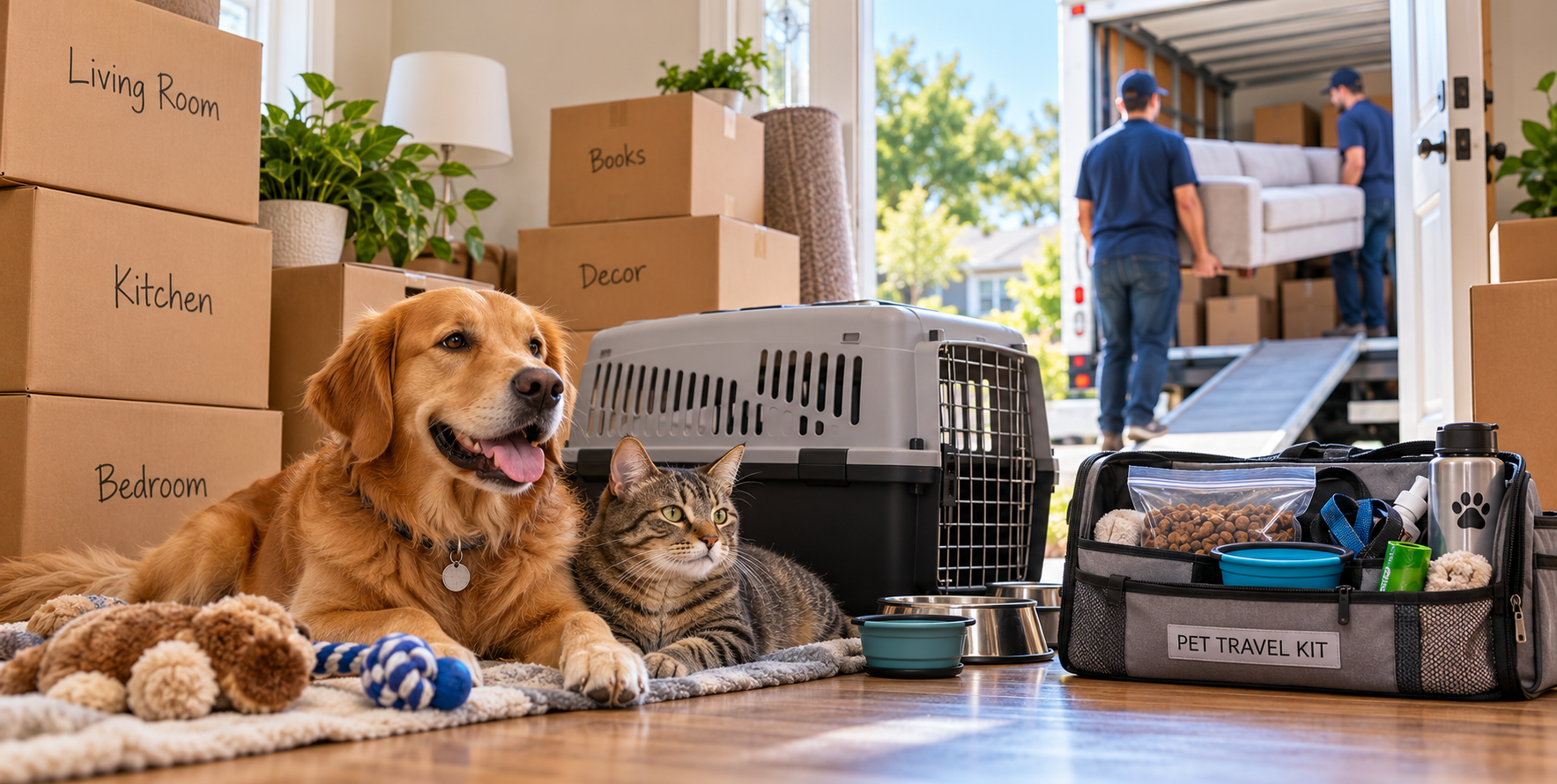
Pack a bag or tote with medications, documents, chargers, toiletries, a few changes of clothes, cleaning products, bedding, basic kitchen supplies, and pet essentials. Add toilet paper, scissors, simple tools, and any items needed to make the first night comfortable. Do not bury the essentials kit beneath furniture simply because it was packed first.
After the move, save reusable boxes and protective blankets that are still in good condition, and recycle damaged cardboard according to local rules. A short inventory of leftover supplies will make the next move easier.
Frequently Asked Questions
What boxes should I use for books?
Small, sturdy boxes are usually best because books become heavy quickly. Reinforce the bottom and keep each carton at a weight you can lift safely.
Do I need mattress bags?
They can help protect mattresses from dirt and abrasion during a move. Make sure the mattress is clean and dry, and consider whether the chosen cover is appropriate for longer-term storage.
Can I use old cardboard boxes for moving?
Yes, when they are clean, dry, structurally sound, and suited to the weight of the contents. Avoid boxes with weakened bottoms or signs of pests or moisture.
Is bubble wrap necessary for every fragile item?
No. Packing paper, dividers, towels, and other clean suitable materials can work for many items. Delicate finishes and valuable antiques may need material-specific protection.
What supplies are most often forgotten?
Labels, markers, tape cutters, furniture pads, hardware bags, basic tools, and a clearly separated first-night kit are easy to overlook in an otherwise organized move.