Moving is easier when you make the big decisions before boxes begin piling up. Most stressful moving days are not caused by one impossible task. They come from dozens of small details left until the last minute: a missing reservation, a box with no label, furniture that will not fit through the door, or an essential item packed at the bottom of the truck.
A workable moving plan connects the schedule, budget, packing process, transportation, and first days in the new home. You do not need to organize every hour perfectly, but you do need to know which decisions must happen first.
Begin with a realistic timeline
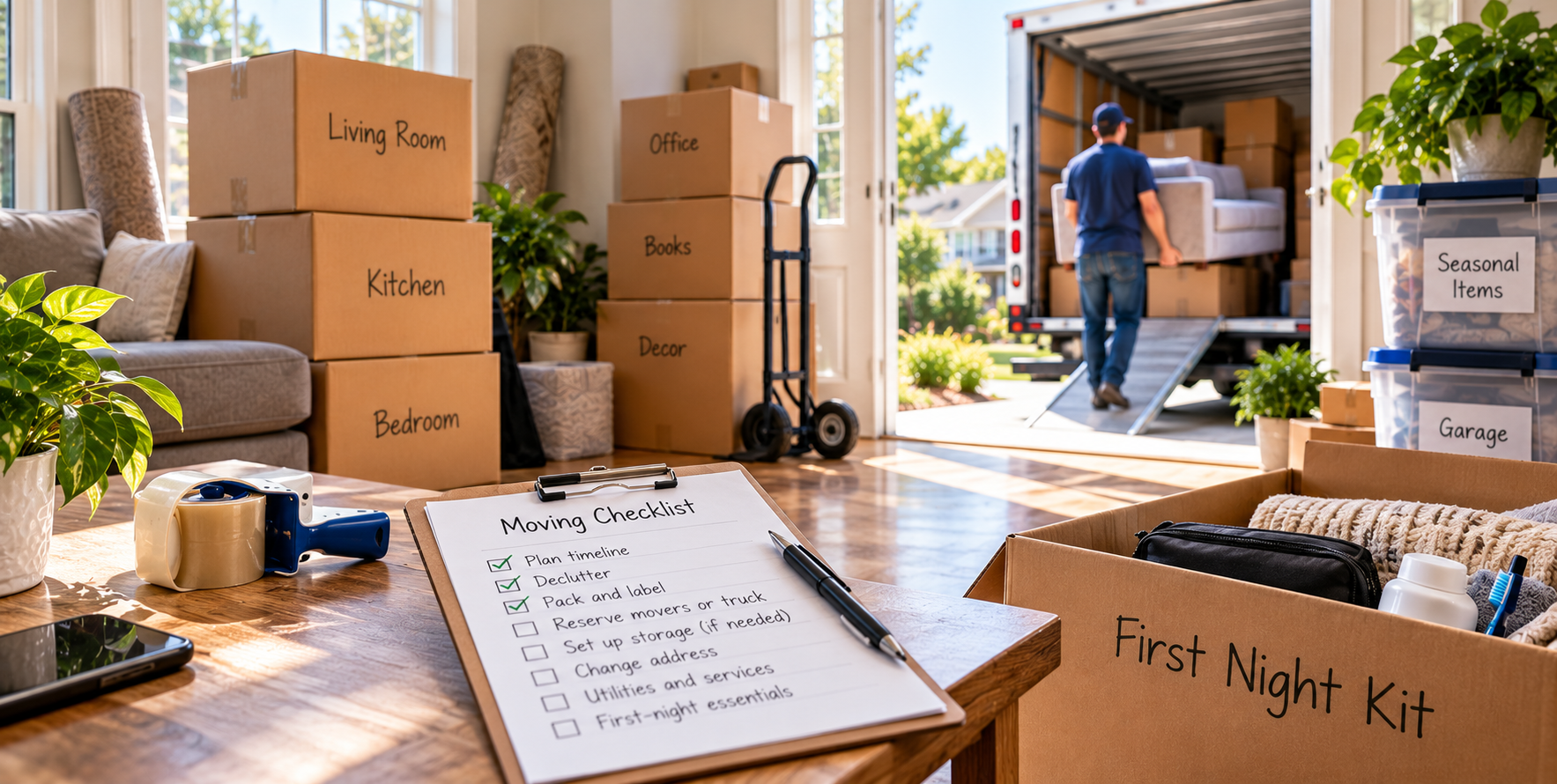
As soon as your move date is reasonably firm, build a checklist of tasks. Book movers or a rental truck early enough to secure suitable equipment, especially for weekends, end-of-month dates, and popular moving seasons. Confirm building rules for elevators, parking, loading zones, certificates of insurance if required, and permitted moving hours.
Leave time for address changes, utility transfers, school or healthcare arrangements, and service appointments. If you are buying or renting a new home, prepare for the possibility that move-in timing may shift. A modest schedule buffer is easier to handle than planning every step around a handoff that cannot slip by even one hour.
Declutter before buying packing supplies
Walk through each room and sort belongings into keep, donate, sell, recycle, and discard categories. Moving items that you do not want simply adds packing, transportation, and unpacking costs. Handle bulky furniture decisions early because they affect truck space and whether you need temporary storage.
Do not save the garage, attic, and storage closets for the final evening. Those areas often contain the greatest number of forgotten items. If your new home has a different layout, measure both the furniture and the destination rooms before deciding what to bring.
Pack room by room and label consistently
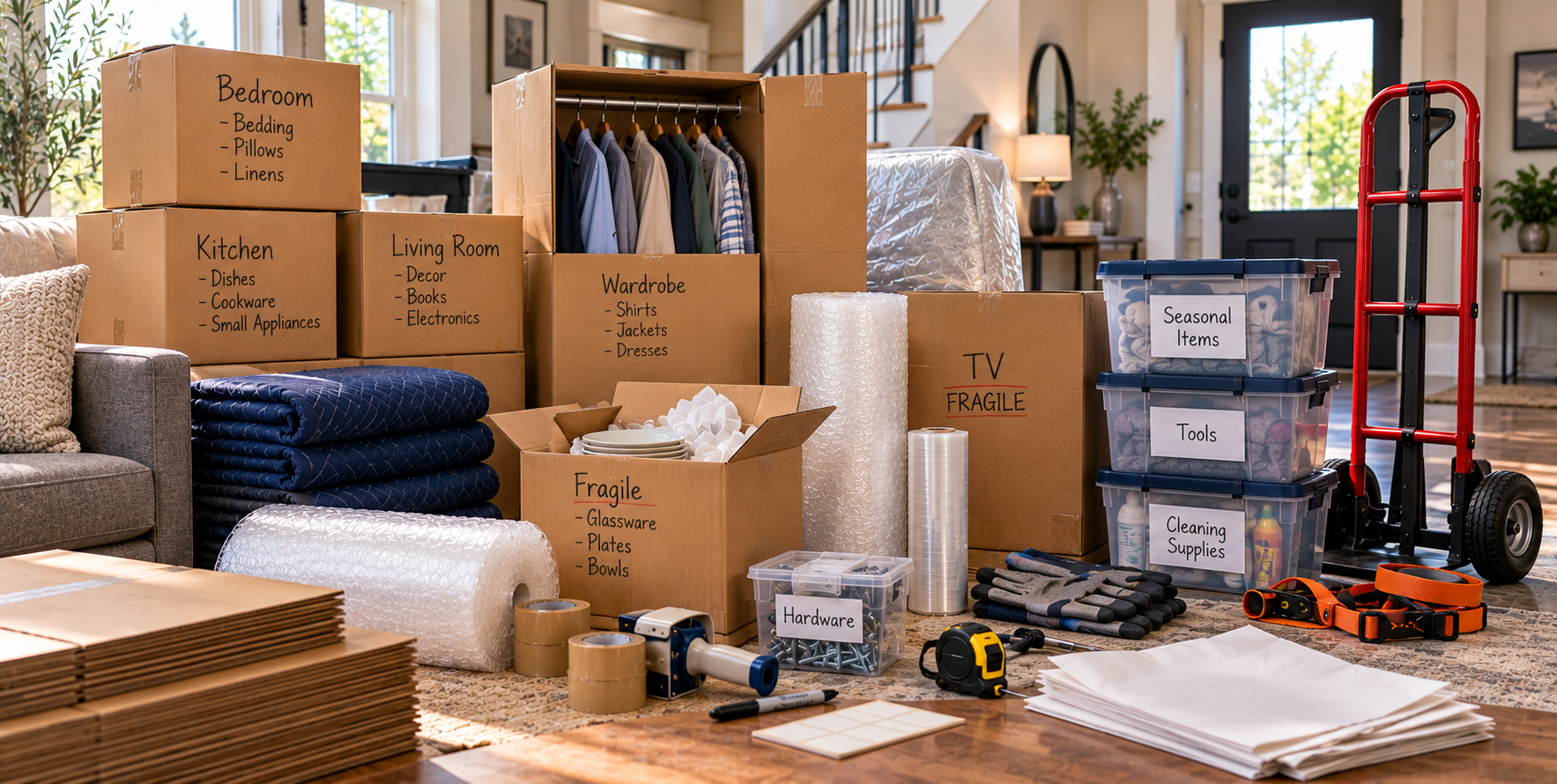
Start with rarely used objects, seasonal items, books, and decorative pieces. Pack dense contents in smaller boxes and lighter items in larger boxes. Wrap fragile kitchenware carefully and avoid leaving empty space where objects could shift. Mark each box with its destination room, a short content description, and a number tied to your inventory.
Keep a separate list of boxes going into a storage unit rather than directly into the new home. This makes it easier for movers to load in the right order and reduces the risk of accidentally sending a first-night necessity into long-term storage.
Measure furniture and plan loading access
Before moving day, measure large pieces along with doorways, stairwells, hallways, elevators, and truck openings. A sofa that fits in the new living room may still be impossible to turn on a narrow staircase. Remove doors or furniture components only when appropriate and permitted; do not force valuable pieces around corners where finishes or structural joints might be damaged.
Protect floors and doorframes, and keep walking routes clear. Place heavy, stable objects where they can be secured in the truck, with lighter and fragile cartons protected from pressure. Do not overload hand trucks or expect one person to lift an appliance without suitable equipment and assistance.
Compare movers and rental trucks carefully
When hiring a company, obtain written estimates that describe services, dates, handling of stairs, long carries, storage stops, and liability terms. For interstate household goods moves in the United States, the Federal Motor Carrier Safety Administration offers guidance on registered movers, estimates, valuation options, and consumer rights. Verify who will actually perform the move, particularly if you contacted a moving broker.
If you rent a truck, compare more than the advertised daily rate. Mileage, fuel, protection options, taxes, equipment rental, vehicle size, and return terms can materially change the cost. Make sure drivers are comfortable with the vehicle and that the truck can reach the loading area at each address.
Keep important items with you
Prepare a first-night kit with medication, toiletries, chargers, bedding, a change of clothes, snacks, cleaning items, and basic tools. Keep identity documents, keys, cash, jewelry, and irreplaceable small valuables in your direct possession. Photograph sensitive electronics and disconnect cables with labels if you will need to reconstruct complicated setups.
Make a separate plan for children and pets. An active loading area with open doors and moving vehicles can be noisy and unsafe. Pets should be secured in a quiet location or cared for elsewhere during the busiest part of the move; see the Moving With Pets Guide for more detail.
Use temporary storage when it solves a real problem
A storage unit may be helpful when closings or leases do not align, you need to stage a home, or renovations are not finished. Compare monthly rent, transport, insurance, and any second loading process before deciding. How a Storage Unit Can Make Moving Easier explains how to use a unit without turning it into an unnecessary expense.
Measure items and choose a sensible size. Arrange contents so the first things you need are accessible, and avoid storing essentials you cannot afford to be without. Ask about gate access, truck clearance, elevators, and move-out notice requirements before signing.
Make move-in day easier than move-out day
Clean the new space, confirm working utilities, and photograph its condition before unloading where appropriate. Direct boxes to their labeled rooms and set up beds and basic bathroom supplies first. Resist the urge to open every container immediately; clear walkways and assemble essential furniture before unpacking decorative items.
Check items against your inventory as they arrive. If professional movers are involved, inspect visible damage and follow the required documentation procedure before signing final delivery paperwork. Save contracts and receipts until all charges and claims are resolved.
Frequently Asked Questions
How early should I start packing?
As soon as the move is likely, begin sorting and packing nonessential items. The right lead time depends on household size, travel distance, and the amount of help available.
How do I make moving day less stressful?
Confirm reservations, label boxes, protect access routes, keep essentials with you, and assign clear responsibilities. A written plan prevents many last-minute decisions.
Is it better to move myself or hire professionals?
It depends on distance, budget, furniture size, stairs, physical ability, and time. Compare the full cost and risk of each option instead of assuming one is always cheaper.
Should I rent storage between homes?
It may help when dates do not align or the new space is not ready. Consider the extra rental and handling costs and whether there is a simpler scheduling alternative.
What should I unpack first?
Prioritize beds, bathroom supplies, essential kitchen items, medication, work or school necessities, and pet supplies. Decorative items and long-term storage boxes can wait.