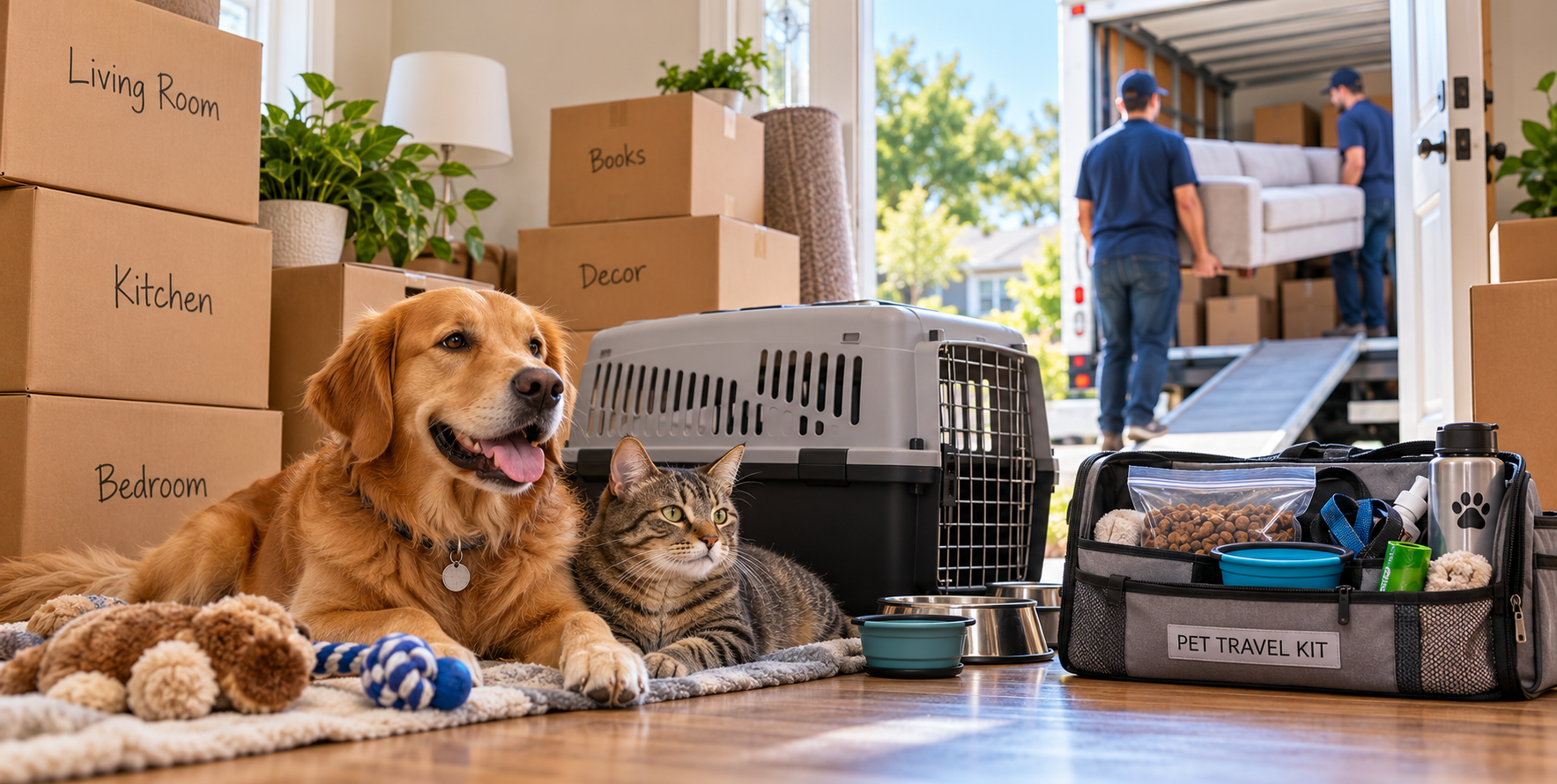
Moving can be confusing for pets. Familiar rooms fill with boxes, strangers carry furniture through open doors, and routines change just when an animal needs reassurance. Cats may hide or try to escape, while dogs can become unsettled by noisy loading activity and unfamiliar surroundings. A successful move considers your pet's safety before packing begins, during transportation, and through the first days in the new home.
Most pets adjust with time, but preparation can make the process safer and less stressful. The goal is to preserve routines where possible and keep animals away from hazards rather than expecting them to cope with the chaos of moving day.
Prepare pets gradually before moving day
Bring moving boxes into the home early so pets can get used to them. Maintain regular feeding, walks, playtime, and rest as much as possible. If your pet is frightened by a carrier or crate, start gradual positive training well before the move rather than introducing confinement at the last moment. The ASPCA recommends giving pets time to become comfortable with carriers and short car rides ahead of travel.
Update identification tags and microchip registration with your current contact details. Arrange a veterinary appointment if you are moving a long distance, have concerns about travel, or need medications or paperwork. Check destination rules for vaccinations, animal registration, and any health certificate requirements, which may vary by state and type of travel.
Create a safe plan for loading day
Open exterior doors, moving equipment, and distracted helpers create an escape risk. Keep pets in a secure, quiet room with a closed door and clear instructions not to enter, or arrange care with a trusted person away from the property. Set out water, bedding, and appropriate litter or comfort items. A sign on the door can remind movers not to open it accidentally.
Do not leave a cat or dog loose in the house while large furniture is being carried out. Even friendly animals may dart through a doorway when startled. If possible, move pets after the busiest loading has finished and before the final walkthrough, keeping them supervised throughout the transition.
Pack a separate pet travel kit
Keep food, bottled water, bowls, medications, leash, waste bags, litter supplies, cleanup materials, and familiar bedding within easy reach. Bring copies of veterinary records and identification information. Pack more food and medication than you expect to need in case the trip is delayed, and avoid switching diets in the middle of the move unless your veterinarian advises it.
A favorite toy or familiar blanket can help some pets feel more secure. Do not place the pet kit in a box headed for self-storage or at the front of a deeply packed moving truck. Keep it with the people responsible for the animals.
Transport pets safely
Dogs and cats generally should travel in properly sized, secured carriers or other suitable safety restraints recommended for their species and size. The carrier needs ventilation and enough room for the animal to reposition comfortably. Secure it so it does not slide or become a projectile during sudden braking. Never transport a pet in the cargo area of a moving truck without an appropriate, safe transport setup.
Plan stops based on the animal's needs and the distance traveled. Never leave a pet unattended in a parked vehicle, where temperature changes can become dangerous quickly. If your pet experiences motion sickness or severe anxiety, consult your veterinarian about appropriate strategies rather than using unprescribed sedatives.
Keep your pet's routine during a long-distance move
Maintain feeding and walk schedules as closely as practical and introduce unfamiliar rest stops cautiously. Use a secure leash or harness before opening the vehicle, even with an animal that normally stays nearby. New environments can trigger unpredictable behavior. For cats, open carriers only in a securely enclosed location where escape is not possible.
If your move involves an overnight hotel stay, confirm pet rules, fees, and any breed or size restrictions before traveling. Bring familiar bedding, check the room for hazards, and do not leave an anxious pet alone in an unfamiliar place without a clear, safe plan.
Introduce the new home gradually
Before allowing pets to explore, inspect the new home for open windows, gaps, loose wires, cleaning chemicals, unsecured furniture, and other hazards. Set up a quiet room with water, food, bedding, and litter for cats. Let pets become comfortable there first, then expand access gradually. This can be particularly helpful when boxes and movers are still coming and going.
Keep dogs supervised outdoors until fencing, gates, and the surrounding environment have been checked. Update local registration requirements as appropriate and identify a nearby veterinarian. Behavioral changes can be normal during an adjustment period, but persistent refusal to eat, signs of illness, or severe distress warrant veterinary advice.
How storage can help without involving the pet
Temporary storage can reduce clutter in a home before or after a move. Packing seasonal items, spare furniture, and nonessential boxes into a storage unit can make the home calmer and provide more space to create a safe area for pets. However, storage units are for permitted belongings, never for housing or leaving animals, even temporarily. Do not leave pet food or other prohibited perishable goods in a unit.
If the new home is not ready, arrange legal, pet-appropriate temporary accommodations first, then use storage separately for furniture. See How a Storage Unit Can Make Moving Easier for organizing a staged move without sacrificing access to essentials.
Special considerations for small animals and other pets
Birds, reptiles, fish, and other small animals may need species-specific temperature management, equipment, handling, or transport rules. Changes in water chemistry, air temperature, or enclosure stability can be dangerous. Plan with a veterinarian or knowledgeable specialist rather than assuming methods designed for dogs and cats will work for every species.
Keep any necessary life-support equipment and supplies accessible and confirm that travel conditions are suitable. Some animal species or jurisdictions have additional legal requirements, so investigate those well before the moving date.
Frequently Asked Questions
Should I keep my cat in a separate room on moving day?
Yes, a secure quiet room can help prevent escape while doors are open and people are moving furniture. Make sure anyone helping understands that the door must remain closed.
How can I reduce my dog's moving anxiety?
Preserve routines, introduce carriers and travel gradually, provide familiar items, and avoid crowded loading areas. Ask a veterinarian for guidance if the anxiety is severe.
Can pets ride in the back of a moving truck?
A moving truck's cargo area is not an appropriate place for unprotected pets. Arrange safe passenger-vehicle transport with suitable restraints or carriers and proper ventilation.
How long does it take a pet to adjust to a new home?
Adjustment varies by animal, temperament, and experience. Provide a predictable routine and introduce rooms gradually; seek veterinary advice if distress or health changes persist.
Can I keep my pet in a storage unit while I move?
No. Self-storage units are not safe or appropriate spaces for animals. Arrange supervised care, boarding, or pet-friendly temporary housing instead.