Self-storage is a convenient way to make room at home, keep furniture between moves, or put seasonal belongings out of the way. But there are limits to what belongs behind a storage unit door. Some items create a genuine safety hazard, others attract pests or cause damage, and a few are simply too important to leave somewhere you don't visit regularly.
Before you pack
Storage facility rules vary. Check your rental agreement and ask the property manager about anything unusual before moving it in.
1. Gasoline, Kerosene, and Other Fuels
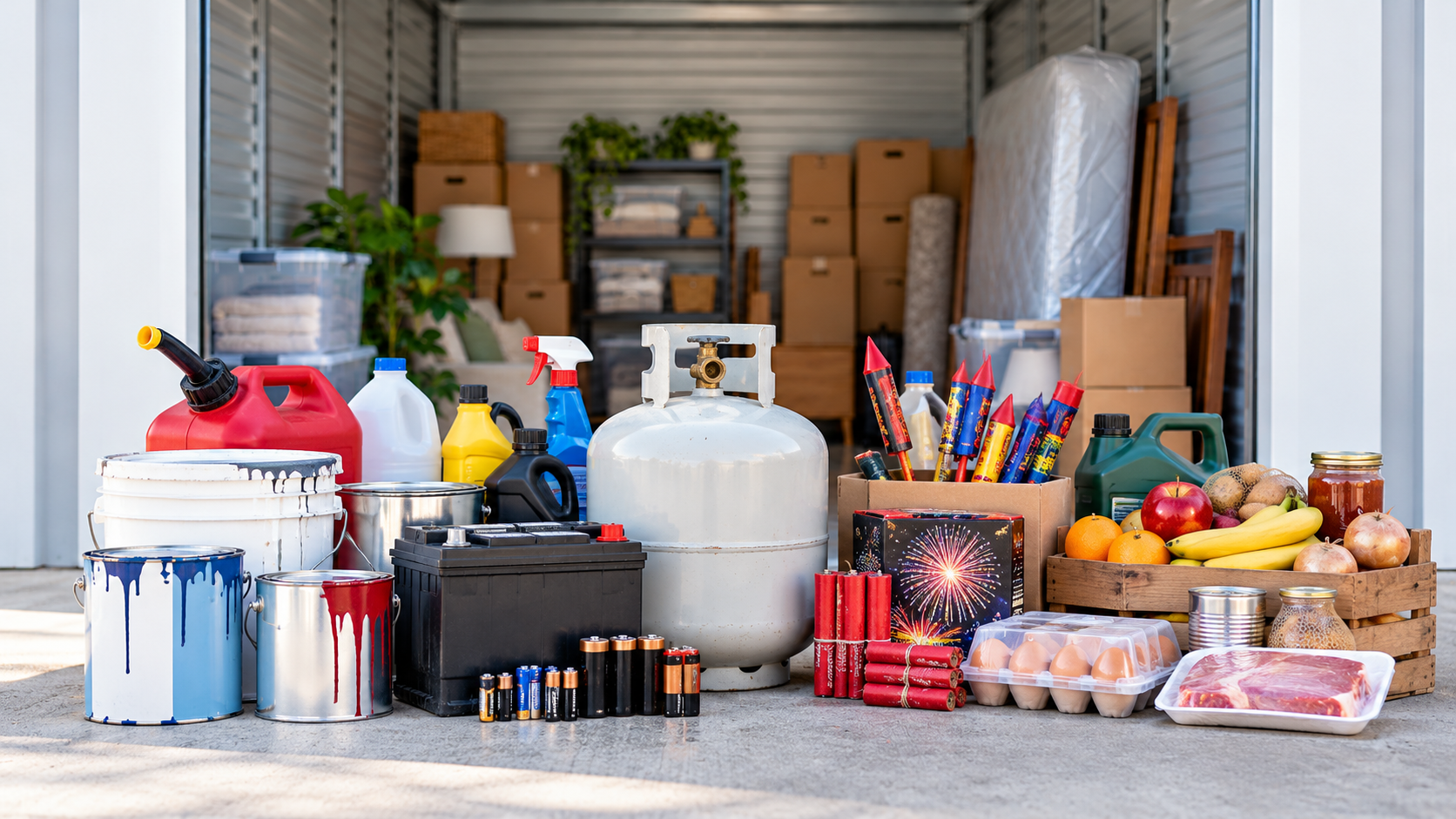
Fuel containers may seem like ordinary garage supplies, especially if you're putting lawn equipment or camping gear into storage. However, gasoline, kerosene, lighter fluid, and similar products can release flammable vapors. A sealed storage unit isn't an appropriate place to keep them, even when the container is tightly closed.
Most facilities prohibit stored fuel, and moving it into a climate-controlled unit doesn't make it acceptable. If you have leftover gasoline or other fuel, follow local household hazardous-waste guidance. For equipment such as a lawn mower, ask the facility whether the machine itself is permitted and what its fuel requirements are. Never assume that a nearly empty tank meets the rules.
2. Propane Tanks and Compressed Gas Cylinders
A propane tank from a grill is easy to overlook when you're packing patio furniture. The same is true of camping cylinders and other containers holding compressed gas. These items present risks if they leak, are damaged, or are exposed to unsuitable conditions, so they generally aren't allowed inside standard self-storage units.
The safer approach is to keep cylinders in an approved location that meets the manufacturer's instructions and applicable local fire rules. If you're storing a grill, check with the facility about the grill itself and remove any disconnected propane cylinder rather than placing it beside the appliance.
3. Fireworks, Ammunition, and Explosive Materials
Fireworks, explosives, and ammunition do not belong in an ordinary storage unit. These materials can create serious safety and liability concerns, and storage operators commonly list them among prohibited items. Even a small leftover package of fireworks can be an issue when it's buried in a box of holiday decorations.
Keep these products out of your moving boxes altogether. Legal requirements for ownership, storage, transport, and disposal vary by location and by product. Follow those requirements and, when necessary, ask the appropriate local authority for disposal guidance instead of bringing the materials to a storage facility.
4. Paint, Paint Thinner, Solvents, and Harsh Cleaning Products
Home improvement projects tend to leave behind half-used paint cans, adhesives, solvents, aerosol products, and strong cleaners. It's tempting to place everything in a plastic bin and store it alongside your tools, but many of these products can be flammable, corrosive, reactive, or prone to leaking. Storage companies often prohibit paint and hazardous chemicals even if they are in their original packaging.
Sort these supplies before your move. Products that can be safely kept at home should be stored according to their labels, while unwanted chemicals may need to go through a local household hazardous-waste collection program. Don't mix leftover chemicals together or pour them down a drain to empty the containers.
5. Refrigerated, Frozen, or Other Perishable Food
Food that needs refrigeration or freezing can spoil quickly in a storage unit. Meat, dairy products, produce, frozen meals, and prepared food are obvious examples, but an overlooked grocery bag or unopened cooler can create the same problem. Once food spoils, odors and pests can become difficult to control, and nearby belongings may be affected.
The best plan is to use, donate when appropriate, or properly discard perishables before move-in day. If you're storing a refrigerator or freezer, empty it completely, clean the interior, and allow it to dry. Leave the doors appropriately secured or ajar according to the appliance manufacturer's recommendations and the facility's rules to help prevent trapped moisture and odors.
6. Dry Food, Canned Goods, and Pet Food
Even shelf-stable food can be restricted in self-storage. Boxes of cereal, bags of rice, snacks, and pet food may attract insects or rodents if packaging is damaged. Some facilities prohibit food entirely, including canned and sealed items, because they want to reduce pest risks across the property.
Don't count on airtight plastic tubs as a workaround: a sealed container may reduce odors, but it doesn't override your rental agreement. Keep pantry supplies in an appropriate food-storage location and check the facility's policy before storing anything that could be considered edible, including treats and feed for animals.
7. Live Plants, Seeds, and Soil That May Harbor Pests
Plants need light, suitable temperatures, ventilation, and regular attention. A standard storage unit can't reliably provide those conditions, and the soil can introduce moisture or pests. For that reason, living plants are typically prohibited even when you're only storing them for a few days during a move.
Arrange for plants to stay with a friend, in your home, or in another suitable environment until you're ready to move them. If you're packing empty planters, clean and dry them first. Bagged soil, gardening chemicals, and similar supplies may have separate restrictions, so it's worth asking before placing garden materials into the unit.
8. Pets or Other Living Animals
A storage unit is never an appropriate place for a pet, whether the animal would be there for several hours or overnight. Units aren't designed to provide the ventilation, temperature control, water, supervision, or emergency access that animals require. Keeping an animal in a storage unit can also violate rental policies and animal-welfare laws.
During a move or renovation, make a separate plan for pets before packing begins. A trusted friend, family member, boarding provider, or pet-friendly temporary accommodation is far safer than any storage space. The same rule applies to other living creatures, including reptiles, birds, and small animals in cages.
9. Wet Furniture, Damp Clothing, and Dirty Equipment
Not everything on this list is inherently dangerous. Sometimes the problem is the condition of an otherwise acceptable item. A damp sofa, rolled-up wet tent, unwashed cooler, or box of clothing packed before it has fully dried can introduce moisture and unpleasant odors into the unit. Over time, that moisture may contribute to mold or mildew, especially in enclosed or poorly ventilated spaces.
Clean and thoroughly dry belongings before storing them. Let mattresses and upholstered furniture air out, wash and dry clothing, and make sure camping gear is completely dry before folding it. Climate control can help moderate environmental conditions, but it won't solve the problem of putting wet items into storage in the first place.
10. Damaged Batteries and Improperly Stored Lithium-Ion Batteries
Batteries deserve special attention because rules vary with the battery type and the equipment involved. Some facilities specifically prohibit automotive batteries or other hazardous batteries. Lithium-ion batteries, commonly found in power tools, e-bikes, scooters, and electronics, can present a fire hazard if damaged, defective, overheated, or handled improperly.
Never store a swollen, leaking, damaged, or recalled battery in a unit. Don't charge batteries inside a storage unit unless the facility specifically authorizes the activity and it can be done in accordance with all safety requirements. For batteries that are permitted, follow the manufacturer's temperature and storage instructions; keep spare lithium-ion batteries away from combustible items. Unwanted batteries should go to an appropriate battery recycling or collection location, not ordinary trash.
11. Vehicles and Gas-Powered Equipment That Don't Meet Facility Rules
Vehicle storage is available at many properties, but that doesn't mean you can park any car, motorcycle, ATV, or piece of powered equipment inside any unit. Facilities may require a vehicle to be operable, properly registered, and insured. They may also specify acceptable fuel levels, prohibit fluid leaks, or require a particular type of unit or parking space.
The same concerns can apply to lawn mowers, generators, and other motorized equipment. Contact the facility before renting, explain exactly what you plan to store, and ask for its written requirements. A vehicle's physical ability to fit through the door doesn't establish that storage is allowed.
12. Illegal Drugs, Stolen Goods, or Other Unlawful Property
A storage unit isn't exempt from the law. Illegal drugs, stolen merchandise, and other unlawful property can't be stored simply because the space is privately rented. Such items can expose the renter to serious legal consequences and violate the terms of the storage agreement.
This distinction is separate from ordinary personal belongings that happen to be private or valuable. Store lawful items in accordance with your lease, and remember that local law and individual facility rules may impose additional restrictions on certain regulated goods.
13. Hazardous Waste, Contaminated Materials, and Medical Sharps
Used needles, contaminated medical supplies, unidentified chemicals, pesticides, and hazardous waste pose risks to people handling or entering a unit. Leaking containers can also damage other belongings or the building itself. These materials don't become safe to store simply because they are sealed inside a box.
Use an authorized collection or disposal option suited to the material. For example, sharps often require approved disposal containers and designated collection procedures, while chemicals and pesticides may need household hazardous-waste handling. Your local waste authority or health department can tell you where these items belong.
14. Cash, Irreplaceable Documents, and Extremely Valuable Belongings
Cash, passports, original legal records, rare collectibles, and family heirlooms are different from gasoline or spoiled food: they aren't always dangerous, and not every item in this category is expressly banned. The concern is that a storage unit may not be the best place for something that's difficult—or impossible—to replace. Access can be limited by facility hours, and insurance policies often have exclusions or coverage limits for cash, valuables, and specific types of property.
Keep essential documents somewhere you can reach them when needed, ideally with suitable protection against theft, fire, and water damage. Consider a secure home safe or another appropriate protected location for valuables, and store digital backups of important records where practical. If you do plan to store high-value property, first confirm the facility's value limits, insurance requirements, and applicable coverage exclusions.
15. Anything You Plan to Use as a Living Space or Workshop
A rented storage unit can be useful for holding tools, business inventory, or household items, but it isn't an apartment, office, or workshop. Sleeping in a unit, regularly working inside it, cooking, or running powered equipment can create safety concerns involving fire, ventilation, exits, and electricity. Standard self-storage agreements generally prohibit living in or operating a business out of the unit.
If you need a place to perform work, look for a properly approved workspace. Some storage businesses offer dedicated commercial spaces with different rules, but you should never treat an ordinary storage unit as one without explicit authorization. Storing permitted business equipment is not the same as operating a business on-site.
What Can You Usually Keep in a Storage Unit?
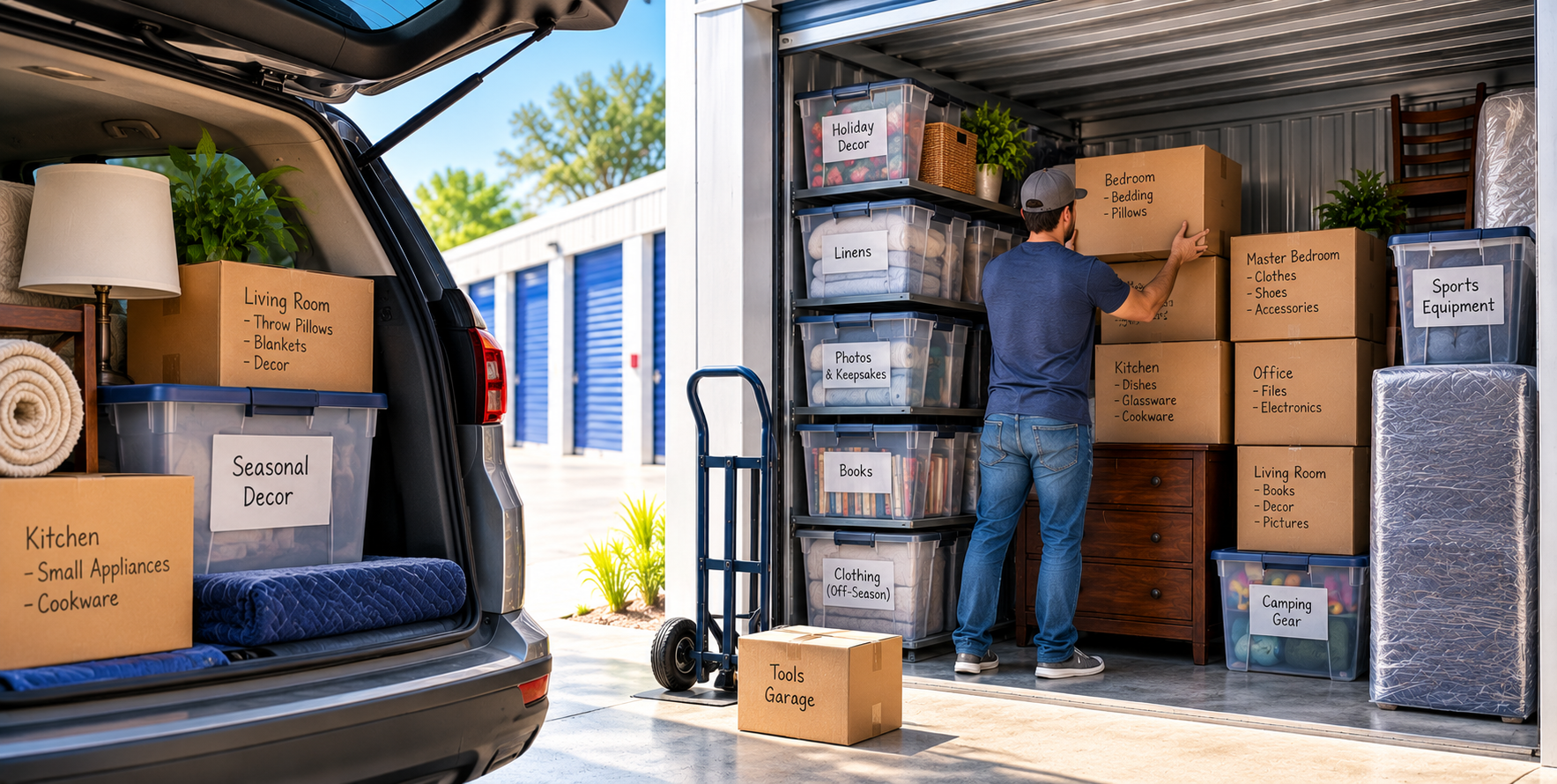
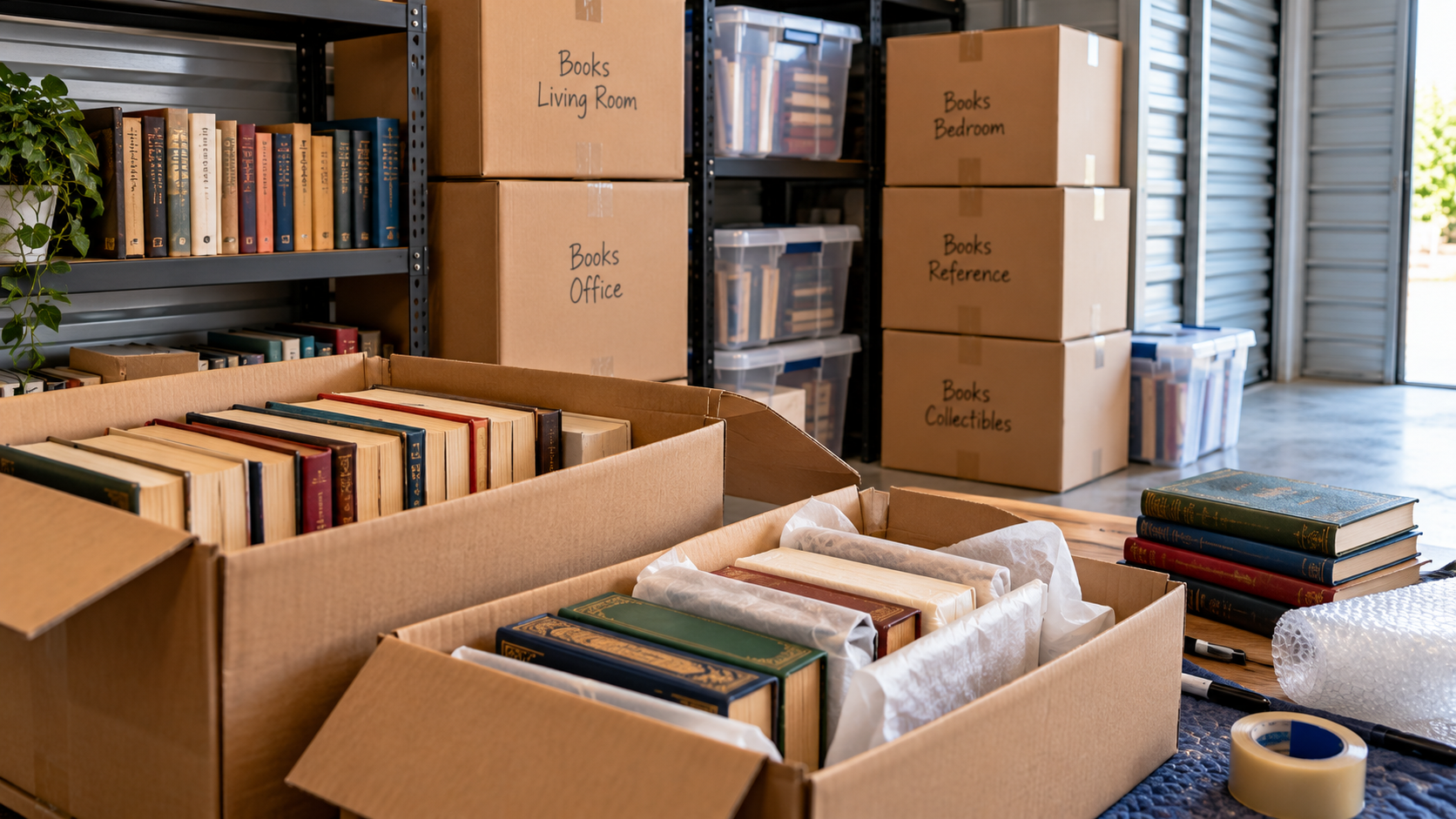
Most people can store far more than they need to exclude. Clean, dry furniture, mattresses, household decorations, boxed clothing, books, sporting goods, and ordinary non-hazardous business inventory are common uses for self-storage. Appliances and electronics may also be suitable when properly cleaned, packed, and protected from conditions that could damage them.
The important distinction is between being allowed to store something and storing it in a way that protects it. For instance, an upholstered chair may be permitted but should be clean and dry before move-in. Sensitive electronics or wood furniture may benefit from a climate-controlled unit, depending on the climate and the length of storage. Facility policies, packing practices, and insurance coverage all matter.
Check the Rental Agreement Before Moving In
Prohibited-item lists vary by company, location, and storage type. A facility may restrict tires, certain appliances, liquids, particular battery types, or high-value property in addition to the general categories above. Some operators set specific limits for vehicle fuel, require registration and proof of insurance, or forbid using outlets inside a unit.
Before signing a lease, ask for the property's prohibited-items policy, especially if you're storing equipment, business supplies, a vehicle, or something unusual. If an item falls into a gray area, getting the answer from facility management before move-in is much easier than being told to remove it afterward.
Frequently Asked Questions
Can you store food in a storage unit if it's sealed?
Many storage companies prohibit food regardless of the packaging, including canned goods, packaged snacks, and pet food. Sealing food in a container doesn't automatically make it acceptable. Check your rental agreement, and plan to store food elsewhere unless the property explicitly permits it.
Can you keep a lawn mower in a storage unit?
Possibly. Some facilities allow lawn equipment but have specific rules about fuel, leaks, and preparation. Ask the facility whether your mower is allowed and what steps you need to take before storing it. Never bring a separate gasoline can into the unit.
Are batteries allowed in self-storage?
Policies depend on the type of battery and the facility. Automotive batteries may be prohibited, and damaged or overheating lithium-ion batteries should never be stored. Check your rental agreement and follow the battery manufacturer's instructions for any batteries that are permitted.
Can you store cleaning supplies in a storage unit?
Don't assume cleaning supplies are allowed. Bleach, strong chemicals, solvents, aerosols, and similar products are frequently restricted because of leaks, fumes, or hazardous properties. Review the facility's prohibited-items list and use appropriate household chemical storage or disposal methods instead.
Can you store a refrigerator or freezer in a storage unit?
Many facilities allow empty household appliances, subject to their rules. Remove all food, clean the appliance, and dry it thoroughly before storing it. Ask about door positioning and any requirements for safe storage, and don't assume the appliance can be plugged in while it's there.
What happens if you store something prohibited?
The consequences depend on the lease, facility rules, and the nature of the item. You may be required to remove it, incur charges, lose access to the rental, or face other contractual consequences. Dangerous or illegal materials could also create more serious safety and legal issues. Review the agreement and ask management whenever you're unsure.