A storage unit can make a move, renovation, or crowded house much easier to manage. But getting everything through the door is only half the job. The way you pack your belongings—and the order you place them inside—can make the difference between a unit that's useful for months and one you dread opening.
You don't need professional moving experience to pack a storage unit well. A little preparation, the right materials, and a sensible layout will help protect your furniture, make better use of the space you're paying for, and save you from digging through an entire stack of boxes to find one item. This guide walks through the process from the first empty box to the final lock on the door.
Start With a Plan Before You Pack
It's tempting to fill boxes as quickly as possible and sort things out at the facility. That usually creates more work later. Before packing, decide what actually needs to go into storage and whether you'll be retrieving any of it while the unit is rented. The answers affect everything from the size you choose to where individual boxes should go.
Go room by room and divide your belongings into three groups: things to store, things to keep with you, and things to donate, sell, or discard. There's little value in paying to store something you already know you won't use again. Set aside essential paperwork, medications, valuables, and anything you'll need during the move rather than letting those items disappear into a labeled box.
Make a simple inventory as you go. It can be a note on your phone, a spreadsheet, or a handwritten list. Record larger furniture pieces and the approximate number of boxes from each room. If you're storing several rooms of furniture, measure the bulkiest items and check the facility's usable interior and door-opening dimensions. An advertised 10x10 unit, for example, may not measure exactly 10 feet in every direction.
Choose a Unit That Fits Your Packing Style
When selecting a storage unit, consider more than the floor space needed for a tightly packed stack. If you're moving once and won't return until you unpack, a relatively dense layout may be fine. If you'll be collecting inventory, holiday decorations, or seasonal clothing throughout the year, plan for a walkway and space to reach shelves or boxes. You may need a little more room than your belongings would occupy when packed wall to wall.
Think about the type of access as well. Drive-up units can make heavy loading easier, while indoor and climate-controlled units may provide conditions worth considering for sensitive belongings. Climate control does not make an item immune to moisture or damage, and the precise conditions and policies vary by facility. If you're storing wood furniture, instruments, electronics, or photographs for a long period, ask what temperature and humidity conditions the facility maintains.
Packing Supplies You'll Actually Use
Good packing materials don't have to be expensive, but mismatched boxes, weak tape, and improvised wrapping can make stacking difficult. Standardizing most of your boxes makes it easier to build stable rows, while specialty boxes and padding are worth using for particularly fragile or unusually shaped items.
| Supply | What It's Useful For | Packing Tip |
|---|---|---|
| Small and medium moving boxes | Books, kitchen items, everyday belongings | Keep heavy boxes small enough to lift safely. |
| Sturdy plastic bins with lids | Seasonal items and goods accessed regularly | Use consistent sizes so they stack securely. |
| Packing tape and tape dispenser | Sealing and reinforcing boxes | Tape the bottom seams as well as the top. |
| Packing paper and bubble cushioning | Dishes, glassware, and breakable items | Wrap individual pieces rather than loose groups. |
| Moving blankets and furniture pads | Wood furniture, tables, and large pieces | Secure padding without putting adhesive on finishes. |
| Mattress and upholstered-furniture covers | Protecting clean fabric from dust and dirt | Follow manufacturer guidance and avoid trapping moisture. |
| Permanent markers and labels | Identifying packed contents | Label two or more sides of each box. |
| Stretch wrap and small parts bags | Bundling removable components | Don't wrap damp or delicate wood tightly in plastic. |
| Shelving, if permitted | Boxes you need to access often | Confirm the facility allows freestanding shelves. |
| Gloves, dolly, and lifting straps | Moving bulky or heavy items | Use help or appropriate equipment for unsafe lifts. |
New moving boxes generally stack more predictably than assorted grocery or shipping boxes, particularly if they'll be stored for months. If you reuse boxes, check that the cardboard is dry, the corners are strong, and there isn't any sign of pests. Skip boxes that have held food, leaked liquids, or become soft from moisture.
How to Pack Boxes So They're Easy to Stack and Find
A well-packed box should be sturdy enough to move, easy to identify, and heavy enough to use the space efficiently without being difficult to lift. Put heavier objects at the bottom and lighter ones above them. Fill empty gaps with crumpled packing paper or other cushioning so items don't shift. If a box bulges badly or the bottom begins to bow, redistribute the contents before sealing it.
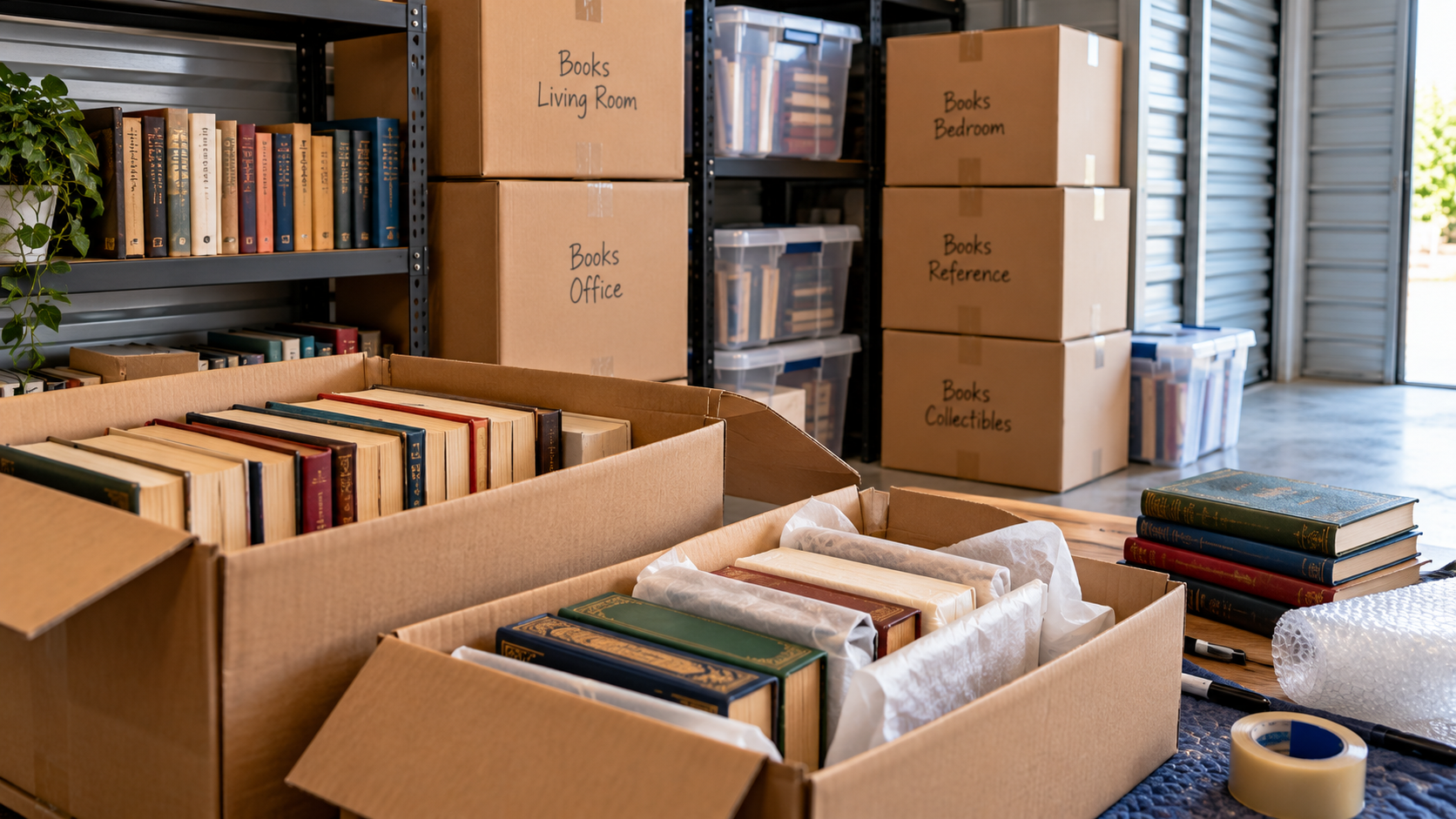
Avoid making every box as large as possible. Books, files, dishes, and tools become surprisingly heavy in a large carton. Use smaller boxes for dense belongings and medium or larger boxes for lighter items such as linens, pillows, and clothing. A consistent range of sizes will also make your storage unit easier to organize vertically.
Label the Contents, Not Just the Room
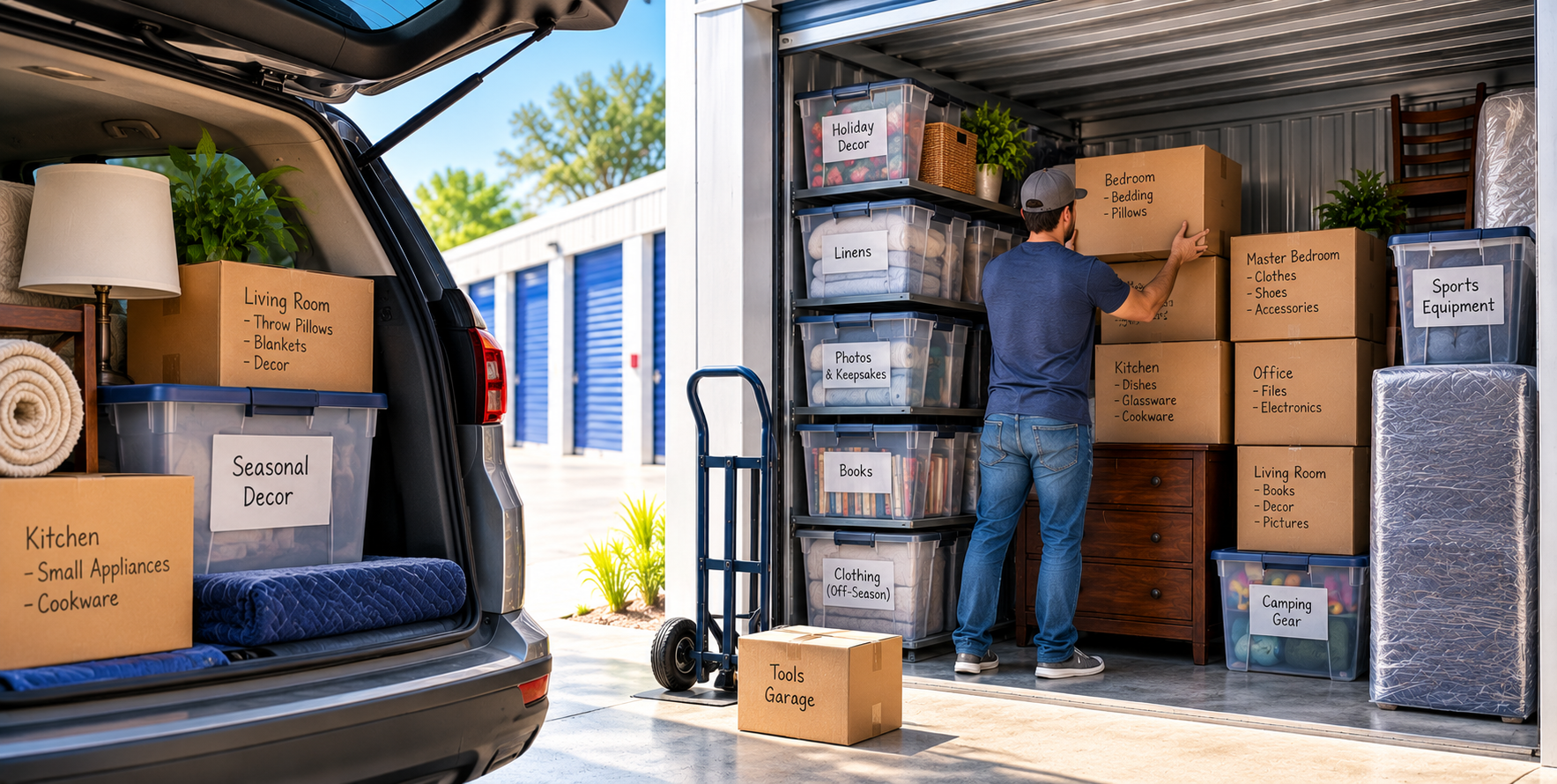
Writing “kitchen” on a box isn't very helpful when you need one set of coffee mugs six months later. A better label reads something like “Kitchen — mugs, coffee maker, serving bowls.” Numbering boxes and matching them to an inventory list makes finding things easier still. Write the label on at least two sides because you may not be able to see the top once the boxes are stacked.
Mark fragile cartons clearly and include handling information, such as which side should face up, when it matters. Labels don't replace proper packing, but they do help prevent a box of glassware from becoming the base of a tall, heavy stack. Consider using a different colored label for items you'll need to access first, such as seasonal equipment or spare household supplies.
Keep a Separate Box of Move-In Essentials
Before you seal everything, prepare a small box or tote with supplies for the day you load the unit. Include a roll of tape, scissors, marker, a few spare labels, basic cleaning materials that are permitted at the site, and any hardware bags for furniture you're assembling later. Keep keys, rental details, and your phone charger with you instead of burying them in storage.
It's also worth keeping a copy of your box inventory on your phone. A printed inventory inside the unit can be useful, but it won't help much if you're trying to remember what's there while you're at home.
Prepare Furniture Before It Goes Into Storage
Furniture often takes up more room than anything else in a unit, so preparation pays off. Clean each piece before moving it, then let it dry completely. Dust and dirt can abrade finishes while furniture is being handled, and trapped dampness can lead to odors or moisture problems. Check drawers, cushions, and storage compartments for forgotten food, small objects, or liquids.
Take apart furniture that can be safely disassembled. Removing table legs, separating bed frames, and taking shelves out of bookcases can make large pieces easier to carry and reduce the space they occupy. Put screws, bolts, and other hardware into labeled bags and secure the bags to the corresponding piece or keep them together in a clearly marked parts box. Take a quick photo before disassembly if you'll need help remembering how everything fits together.
Wood Furniture
Protect finished wood with clean moving blankets, padded covers, or breathable furniture wraps appropriate for the finish. Avoid putting packing tape directly on painted or polished surfaces. Don't pull stretch wrap tightly around wood furniture for extended periods, especially if there's any chance of trapped moisture. If you stack smaller pieces, place suitable padding between surfaces and keep the arrangement stable.
Sofas, Chairs, and Upholstered Furniture
Vacuum fabric furniture, check under cushions, and make sure upholstery is completely dry. Use a clean, properly fitted furniture cover to protect it during transport and storage, taking care not to seal moisture inside. A sofa may fit on its side in some units, but only position it that way if the furniture's construction can support it without damaging the frame or upholstery. Avoid piling heavy boxes on top of sofas or padded chairs.
Mattresses and Bed Frames
Clean and thoroughly dry a mattress before putting it into a mattress bag or cover designed for storage. A mattress should generally be stored in the position recommended by its manufacturer; some mattress types can be damaged by prolonged upright storage or bending. Don't assume that folding it to fit through a narrow doorway is harmless. Disassemble the bed frame, bundle compatible pieces together, and protect exposed edges that might scratch other furniture.
How to Pack Fragile and Hard-to-Store Items
Fragile items need more protection than a “FRAGILE” label. The aim is to prevent individual pieces from bumping against one another and to keep pressure from being transferred through the box. Choosing the right container matters just as much as adding cushioning.
Dishes, Glassware, and Small Breakables
Wrap plates, glasses, and bowls separately with packing paper or suitable cushioning. Use dividers for glassware if you have them, and pack dishes in sturdy cartons with adequate padding at the bottom and around the sides. Plates are often better protected when packed on edge in a properly cushioned dish box rather than laid flat beneath a stack of heavy objects. Never leave an empty gap where the contents can slide around during transport.
Mirrors, Artwork, and Picture Frames
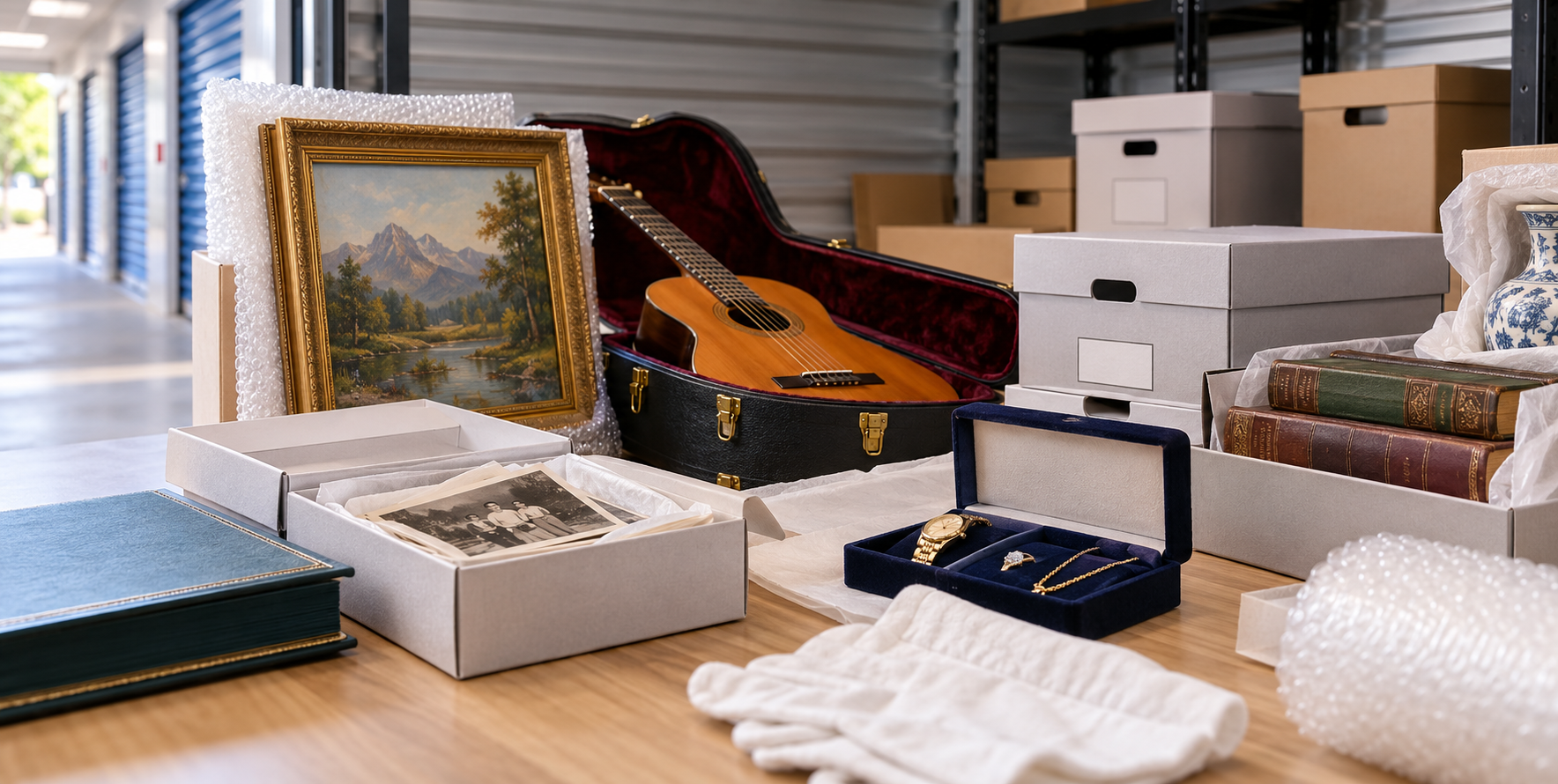
Place corner protectors on frames and use appropriate padding around the entire piece. Large mirrors, framed artwork, and glass panels benefit from purpose-built mirror or picture boxes. Keep them upright in a stable, supported position if their construction permits, and don't wedge them where nearby furniture will press against the glass. Valuable or irreplaceable artwork may require specialized handling and storage conditions beyond those of a standard unit.
Electronics and Cables
If you still have the original packaging for a television, monitor, or gaming system, it may provide the best-fitting protection. Otherwise, use a properly sized box with cushioning that keeps the device from moving. Photograph how cables are connected before unplugging them, then place labeled cables and accessories in separate bags. Check manufacturer instructions for transport position, temperature, and battery handling, and never store damaged or hazardous batteries. Consider a climate-controlled option when appropriate, but remember that the exact environment varies by property.
Clothes, Bedding, and Fabric Items
Wash or clean fabric items and let them dry thoroughly before packing. Breathable garment bags and suitable storage containers can help protect clothing from dust while avoiding trapped moisture. Wardrobe boxes are convenient for suits, coats, and dresses that need to remain hanging. Vacuum bags may save space for some linens, but prolonged compression isn't appropriate for every material, including certain insulated or delicate items. Follow care instructions rather than compressing everything indiscriminately.
Prepare Appliances, Tools, and Outdoor Gear Carefully
Large appliances can create storage problems if they're moved before they've been cleaned and dried. Empty refrigerators and freezers completely, defrost them, clean their interiors, and allow time for moisture to evaporate. Washing machines and dishwashers should be drained and prepared according to the manufacturer's moving instructions. Secure loose hoses and removable parts so they don't get lost in transit.
Ask the facility about its rules for appliance doors, including any requirements intended to prevent child entrapment. Safe door positioning depends on the appliance, the storage environment, and the facility's policies. Don't count on plugging appliances in while they're stored unless the facility explicitly permits it.
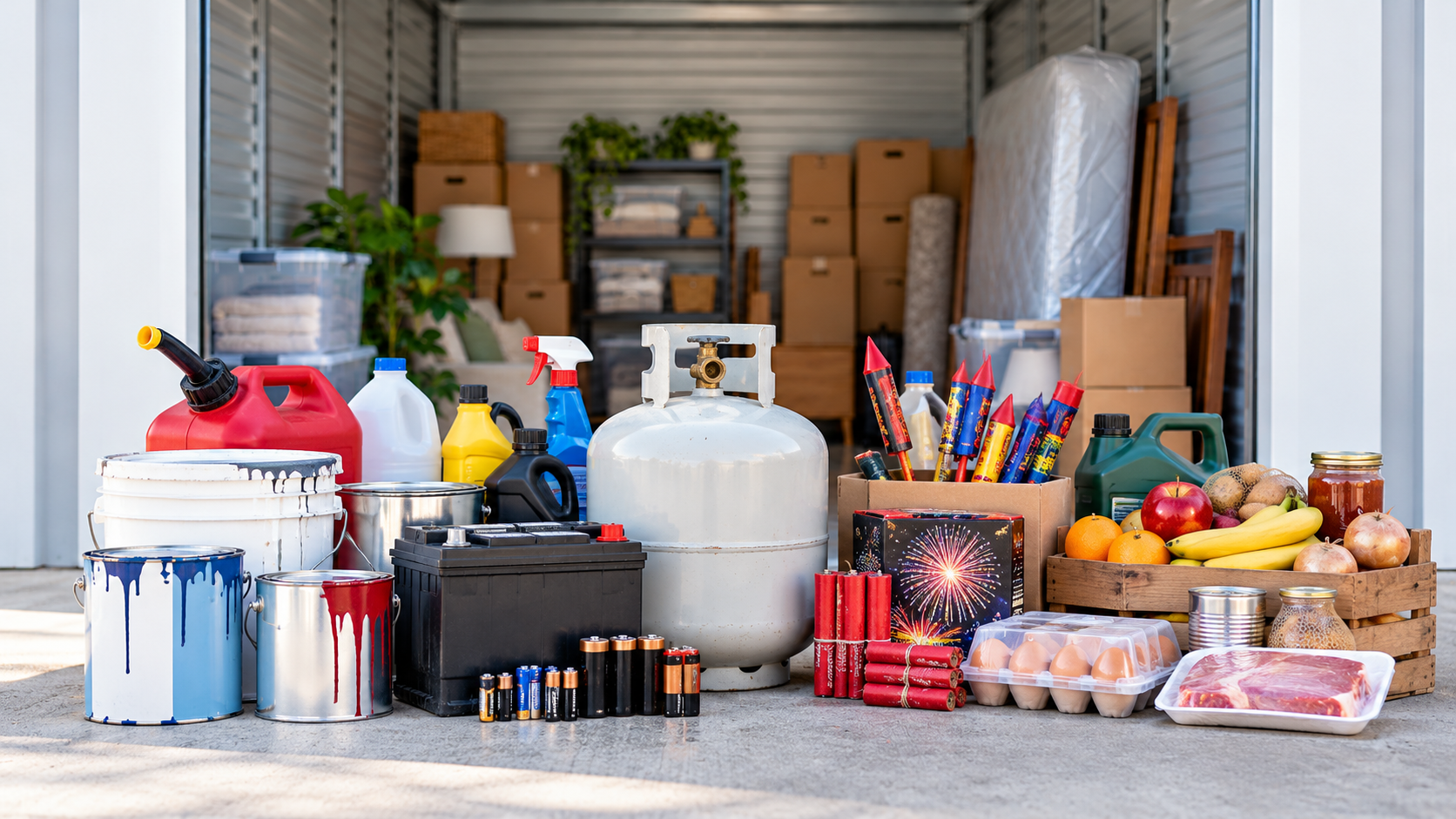
Garden tools, bicycles, sports equipment, and camping gear should be cleaned and dried before moving them in. Empty bags and compartments where damp towels, soil, or food might have been left behind. Gasoline, propane, flammable liquids, and many chemicals are generally prohibited in self-storage units. If you're storing fuel-powered equipment, ask management what preparation is required instead of assuming that draining or disconnecting it will always make the item acceptable.
How to Organize a Storage Unit When Loading It
Packing good boxes is only part of the process. An organized storage unit should be stable, make use of its height without becoming hazardous, and let you retrieve items without unloading half the space. If possible, look at the empty unit before moving day. Note the door position, ceiling height, and any obstacles or restrictions that affect how you can stack belongings.
Put the Largest and Heaviest Items in First
Start with large furniture and appliances that can be positioned safely toward the back or along the walls. Heavy, sturdy boxes should form the bottom of any stacks, with lighter cartons above them. Keep frequently accessed items away from the back unless you have a clear path to reach them. Don't rest a tall stack against a delicate table, mirror, or upholstered chair for support.
The goal isn't to fill every gap. Leave reasonable clearance around items that need ventilation and follow facility rules about height, sprinklers, shelving, and distance from walls or ceilings. Stacks should stand on their own without leaning, and you should never need to climb on boxes or furniture to reach the top.
Create an Aisle if You'll Visit the Unit
If you expect to visit the unit regularly, leave a route from the door to the items you'll need. A center aisle can work well in a wider unit, while a narrow unit may be easier to organize with frequently needed boxes stacked near the entrance. A walkway reduces the need to shift heavy furniture each time you visit and makes it easier to check the condition of belongings.
Face labels toward the accessible side of each stack. Put boxes from the same room or category together, but don't sacrifice stability to keep everything perfectly grouped. If shelving is permitted, it can be a good choice for smaller boxes, business inventory, or seasonal supplies that you retrieve often.
Use Vertical Space Without Overloading Anything
Storage units often have more height than people initially account for. Stack sturdy boxes by size and weight, and use shelving or appropriately designed storage furniture when permitted. Keep heavy items low and lightweight, less frequently accessed items higher. Do not exceed the strength of a carton, shelf, or furniture piece simply to save floor space.
An empty dresser may provide space for light, clean, dry belongings if the furniture can safely support them, but don't force drawers full or make a tall cabinet unstable. Use good judgment with hollow furniture and appliances, and follow manufacturer and facility guidance. A little unused space is better than crushed belongings or a pile that could topple when the door opens.
Make a Simple Map of the Unit
Once everything is loaded, take photographs and sketch a quick layout. Mark where you put the bedroom boxes, kitchen items, holiday decorations, and anything important you may need later. A rough diagram on your phone is enough. Combined with box numbers, it can turn a frustrating search into a quick visit.
Packing for Short-Term vs. Long-Term Storage
A unit rented for a few weeks during a move may not need the same organization as one you'll keep for a year. For short-term storage, focus on safe transport, stable stacking, and an unloading order that works at your next destination. Keep boxes that must come out first close to the door and avoid burying furniture that will be needed immediately.
For long-term storage, think more carefully about materials, moisture, and access. Use clean, durable containers and appropriate protective coverings, inspect belongings periodically when possible, and consider whether climate control is suitable for items vulnerable to heat, humidity, or temperature swings. No unit is a substitute for preparing items properly before storage. Packing damp fabric into an expensive climate-controlled space can still cause trouble.
If you're planning to store things for many months, review the facility's insurance requirements and your policy's coverage limits. Ordinary household belongings, high-value items, and business inventory may be treated differently by insurers, so it's worth resolving those details before moving anything valuable.
Common Storage Packing Mistakes to Avoid
Most packing problems aren't caused by one dramatic mistake. They're caused by small shortcuts that add up: mixing heavy books with fragile dishes, stacking boxes so labels face the wall, or bringing in furniture that never had time to dry. These are the issues worth catching before the unit is full.
- Packing items while damp. Dry furniture, clothing, tents, coolers, and appliances fully before closing them into boxes or covers.
- Using weak boxes for heavy belongings. Choose smaller, sturdy cartons for books, dishes, and tools, and reinforce seams with proper packing tape.
- Skipping an inventory. Label boxes with specifics and keep a basic list somewhere outside the unit.
- Putting heavy boxes on top. Build stable stacks with weight at the bottom and fragile goods protected from pressure.
- Wrapping everything tightly in plastic. Use appropriate, breathable protection for wood and upholstery, and never trap moisture inside coverings.
- Blocking access to essentials. Keep items you'll retrieve first near the door and leave a walkway when regular access is expected.
- Ignoring facility restrictions. Don't pack food, fuel, propane, hazardous chemicals, or other prohibited materials just because they fit in a box.
Storage Unit Packing Checklist
Use this checklist before loading the unit and once everything is in place. It works whether you're storing a few boxes or the contents of an entire household.
| Before You Arrive | Once You're Loading |
|---|---|
| Sort what you're keeping, storing, and donating | Position large furniture and appliances first |
| Make an inventory and number boxes | Put heavy, sturdy boxes at the bottom |
| Measure oversized furniture and door clearances | Group belongings by room or purpose |
| Clean and thoroughly dry belongings | Face box labels toward accessible areas |
| Disassemble furniture and bag hardware | Leave a walkway if you'll need regular access |
| Wrap fragile items individually | Keep stacks stable and respect height clearances |
| Check prohibited items and facility rules | Photograph the finished layout |
| Confirm access hours, lock, and insurance details | Make sure the door closes without pressing on items |
Before leaving, walk through your setup one last time. Check that nothing is leaning against the door, no loose hardware has been left on the floor, and frequently needed boxes are accessible. Keep your inventory, photographs, lock information, and rental agreement in a place you can find easily.