Books are easy to pack and surprisingly easy to damage. A box of paperbacks may survive a short move with little planning, but an extensive library, signed first edition, or collection of old family books deserves a more deliberate approach. Paper absorbs moisture, bindings weaken under pressure, and prolonged exposure to heat or light can discolor covers and pages.
The best storage method depends on whether the books are everyday reading copies, expensive collectibles, or fragile volumes that you hope to preserve for decades. In every case, a clean environment, appropriately sized boxes, and careful handling make a considerable difference.
Sort your collection before you pack
Take books off shelves in manageable groups and check them for dampness, insects, mildew odor, or loose pages. Do not put a musty or visibly moldy book into a tightly sealed box with clean volumes. Separate damaged items and seek specialist advice for a valuable collection. Make an inventory organized by room, author, genre, or shelf number so you can retrieve titles without opening every box later.
Consider which books you will actually need while they are in storage. Keep frequently used references or school materials in accessible boxes, and pack rare or delicate volumes separately. A photo of each shelf before packing can make rebuilding your library easier than relying solely on handwritten labels.
Choose a cool, relatively dry environment
Paper responds to humidity by expanding and contracting. High moisture can encourage mold and cause pages to ripple; excessive heat accelerates deterioration. The Library of Congress recommends cool conditions and a relatively dry, stable environment for most books, and specifically warns against prolonged heat, high humidity, and extreme swings. A climate-controlled storage unit is often preferable to an unconditioned garage or outdoor-access unit for valuable books.
Ask how the facility manages humidity, not just whether the air feels cool. Keep boxes off the concrete floor and away from walls where condensation could form. Avoid placing books near pipes, doors exposed to rain, or locations that smell damp. For irreplaceable manuscripts or rare volumes, a specialist archival environment may be more suitable than a general storage unit.
Use smaller boxes and do not overpack
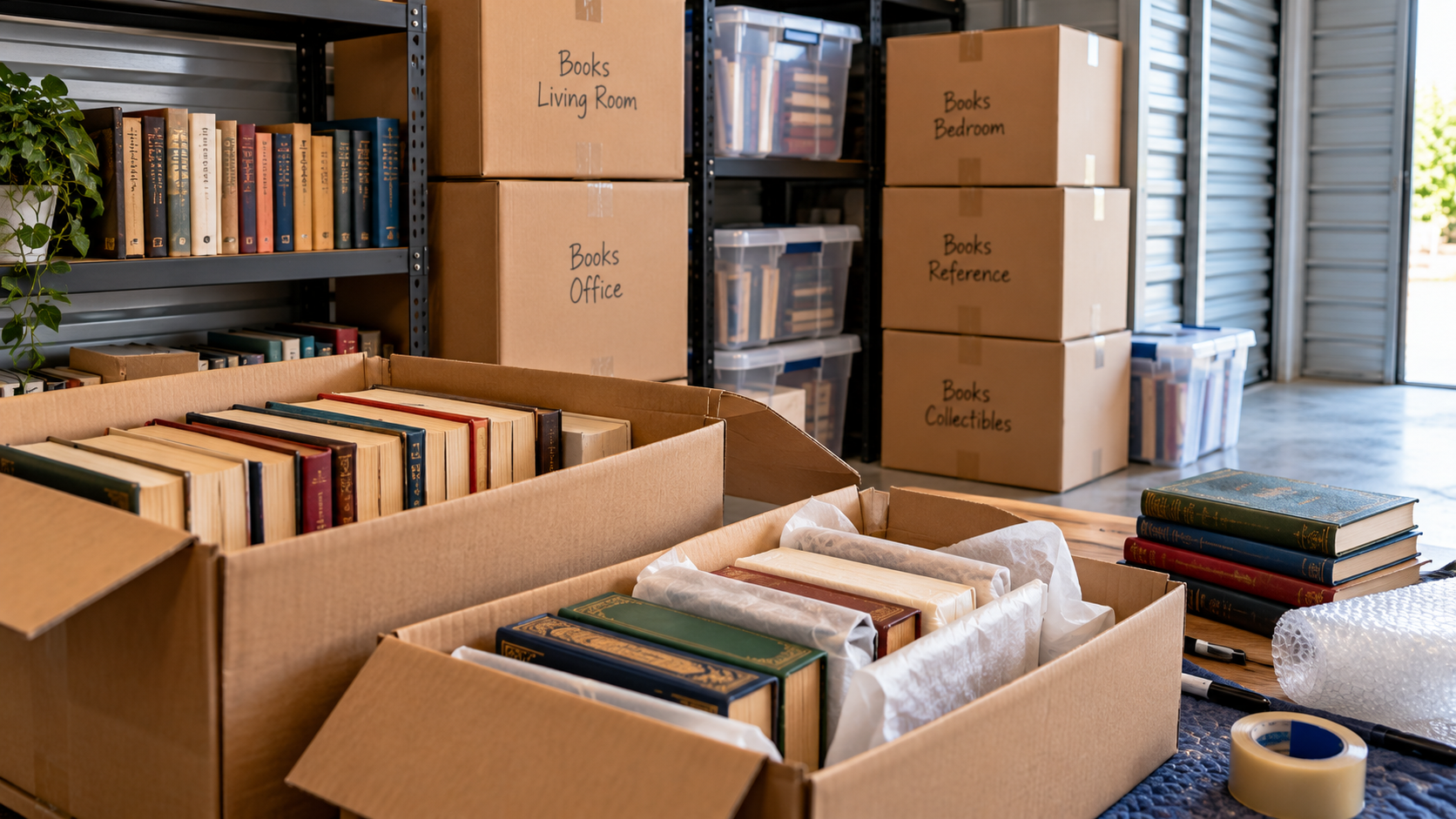
Books are dense. A large moving box filled entirely with hardcovers can become difficult to lift and may split at the bottom. Small, sturdy cartons are generally a better choice. Reinforce them with proper packing tape and distribute weight so no one box is excessively heavy. Avoid using bags, flimsy fruit cartons, or damp boxes that have been stored outdoors.
Pack ordinary books together by similar size. Most hardcovers can stand upright with support, as they would on a shelf, without being squeezed tightly. Large, heavy volumes may be better laid flat in modest stacks so their spines are not strained. Never force a book into a box at an angle, put a heavy box on top of an unsupported pile, or bend a cover simply to save room.
Give rare and delicate books special protection
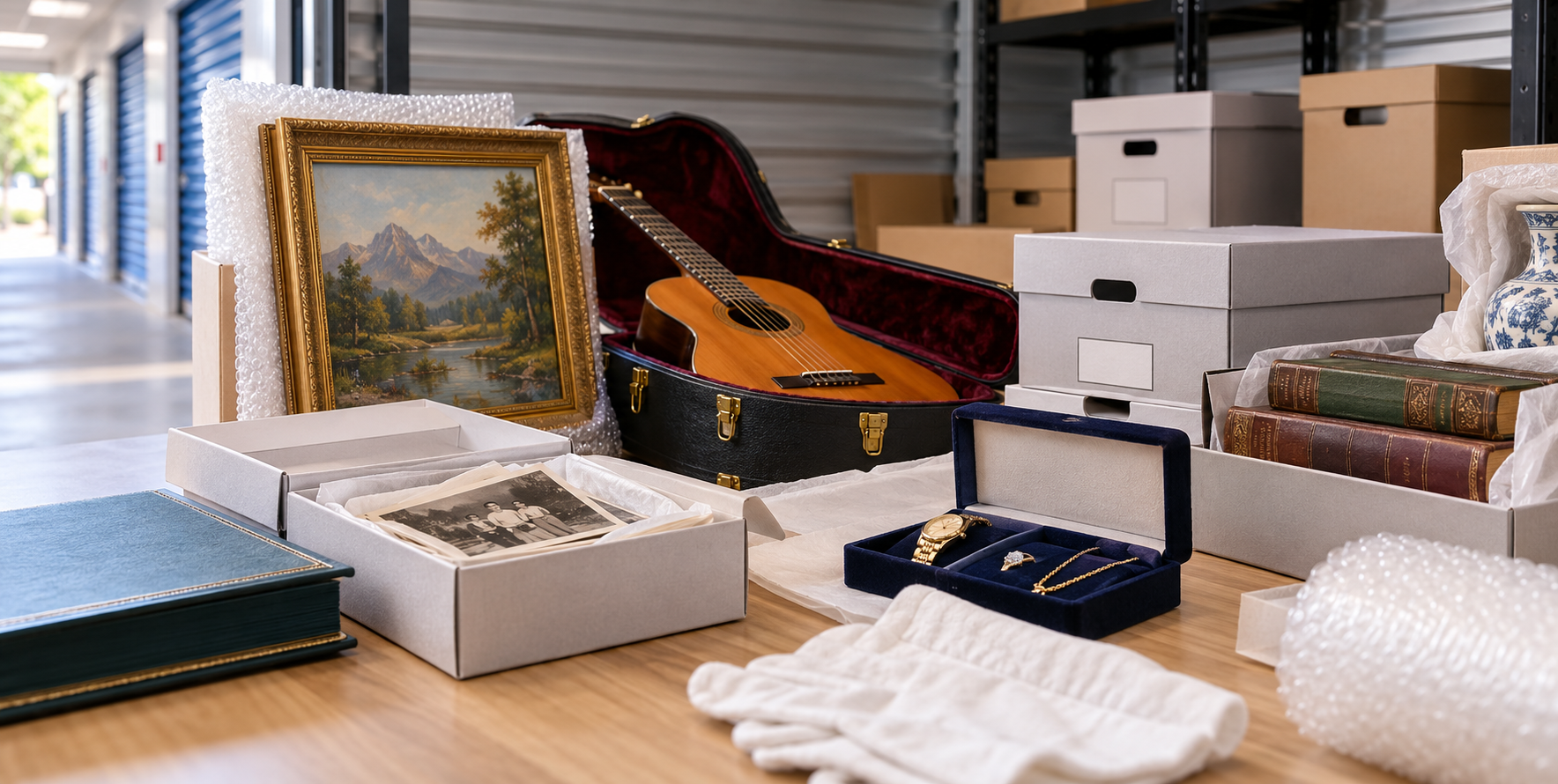
For valuable books, the goal is to prevent abrasion, pressure, dust, and chemical exposure without trapping moisture. Acid-free archival boxes and appropriately selected tissue or supports can help with fragile bindings and paper. Avoid direct contact with ordinary newspaper, which may transfer ink and acidic residues, and do not attach tape or labels to book covers. Plastic wrap pressed tightly around individual books can be a poor long-term choice if moisture becomes trapped.
Photograph inscriptions, dust jackets, and existing damage before storage. If a book has active mold, loose leather, brittle pages, or a detached binding, consult a conservator rather than trying to repair it with household tape or glue. Special collections are often best kept in dedicated enclosures rather than mixed with ordinary moving cartons.
Arrange boxes so you can find and inspect books
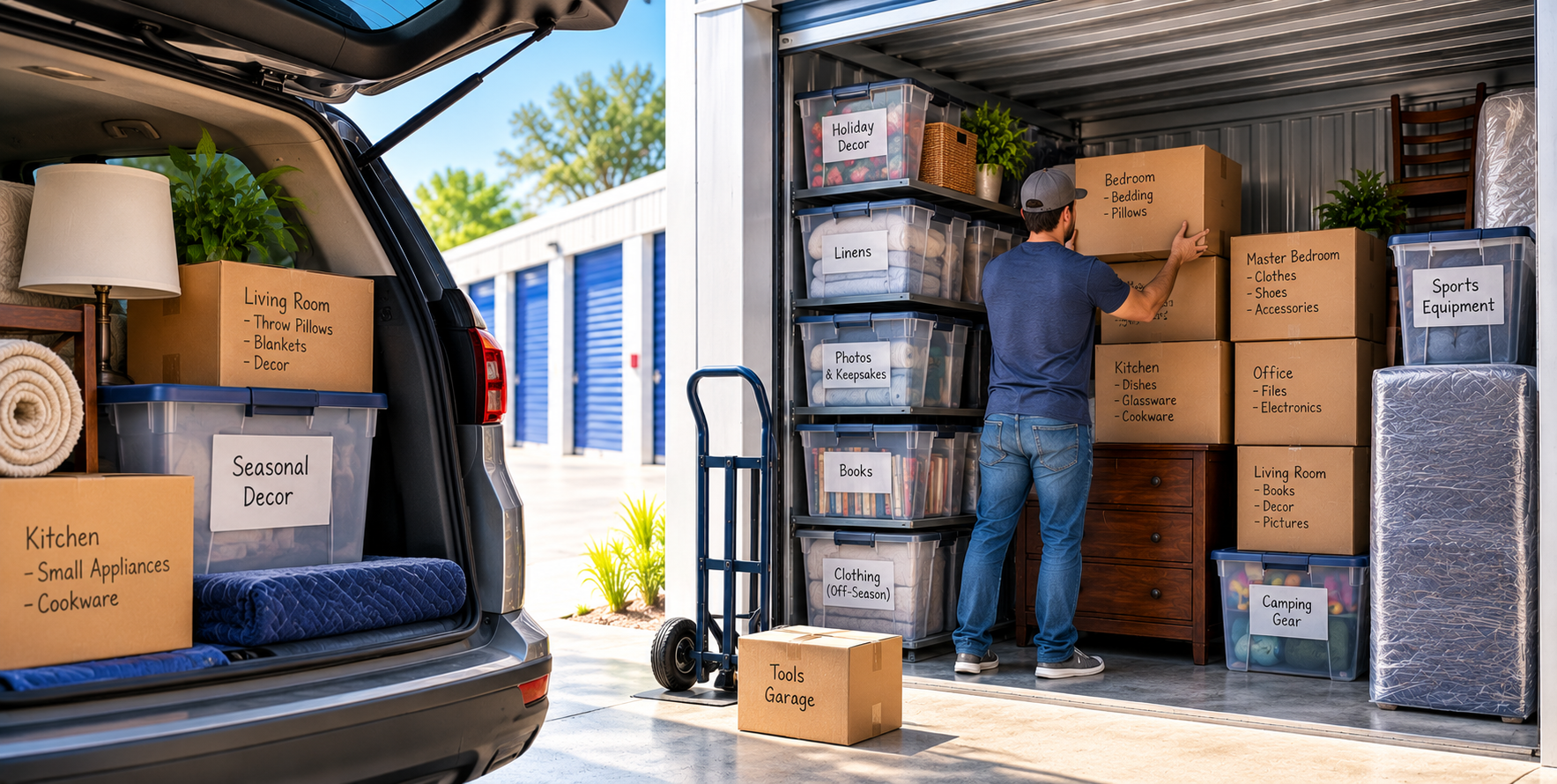
Create an inventory with a box number and a short description of its contents. Write the box number on at least two sides, and keep a separate digital list. If a particular author or series is important, identify it directly rather than using a label such as “miscellaneous books.” Keeping your collection organized is especially helpful when you may retrieve individual books over several months.
Place the heaviest cartons at the bottom of stable stacks and avoid stacking higher than you can safely reach. Leave a narrow aisle and maintain air circulation around the boxes. Sturdy shelving can help if you plan to visit frequently, but confirm that the shelves and unit floor can support the concentrated weight of a large collection.
Short-term versus long-term book storage
For a move lasting a few weeks, strong boxes and a dry, clean space may be sufficient. For a year or more, environmental stability becomes much more important. Check the collection periodically for moisture, pests, and odors. If the location has seasonal humidity problems, plan for those risks before choosing the unit. A small amount of preventive planning can preserve both the appearance and usability of ordinary books.
When you take books out of storage, allow them to acclimate to the room before opening fragile bindings or unwrapping protective materials. Avoid rushing damp or cold items into direct sunlight or close to a heater. If any book smells moldy, isolate it and seek appropriate treatment before returning it to the rest of the collection.
What size storage unit do you need for books?
A modest personal library often fits into a 5x5 storage unit alongside other small belongings. Larger libraries, shelving, or extensive boxed collections may benefit from a 5x10 unit or more. Volume is only one concern: books can create a substantial floor load in a small footprint. Ask the facility about any load restrictions if you are storing hundreds of heavy cartons.
A unit that permits organized shelving and an access path may be more practical than a cheaper one filled wall to wall. If the books are part of an office or home-business inventory, label by category and make sure you can reach the titles most likely to be needed first.
Frequently Asked Questions
Can books be stored in plastic bins?
Clean plastic bins can protect ordinary books from dust and incidental splashes, but they are not a substitute for a dry environment. Do not seal damp books inside, and use archival enclosures for especially valuable items when recommended by a conservator.
Should books lie flat or stand upright?
Most standard hardcovers are comfortable upright with appropriate support. Very large, heavy, or fragile books may benefit from being stored flat in small, supported stacks. Avoid leaning books at steep angles or compressing them tightly.
Do I need climate control for books?
It is a good idea for valuable collections, long-term storage, and climates with high humidity or significant seasonal temperature changes. Check what the facility actually controls and inspect the storage area for signs of dampness.
How do I prevent book mold in storage?
Pack only clean, dry books; choose stable, relatively dry conditions; keep cartons off the floor; and periodically check for moisture or odor. If mold is already present, isolate the affected volumes and seek specialist advice rather than sealing them with the rest.