A storage unit may look like an inexpensive place to keep a bed, couch, and personal belongings, but it is not designed or approved as a home. People sometimes ask whether they can sleep in one while between apartments, during a move, or when rent has become difficult to afford. The important answer is that ordinary self-storage units are not lawful or safe residential spaces, even when they are large enough to hold furniture and a mattress.
A storage rental is intended for storing permitted possessions, not for sleeping, cooking, bathing, or establishing a residence. Understanding the difference can help you avoid losing access to your belongings or putting yourself in a dangerous situation.
Why storage units cannot be used as homes
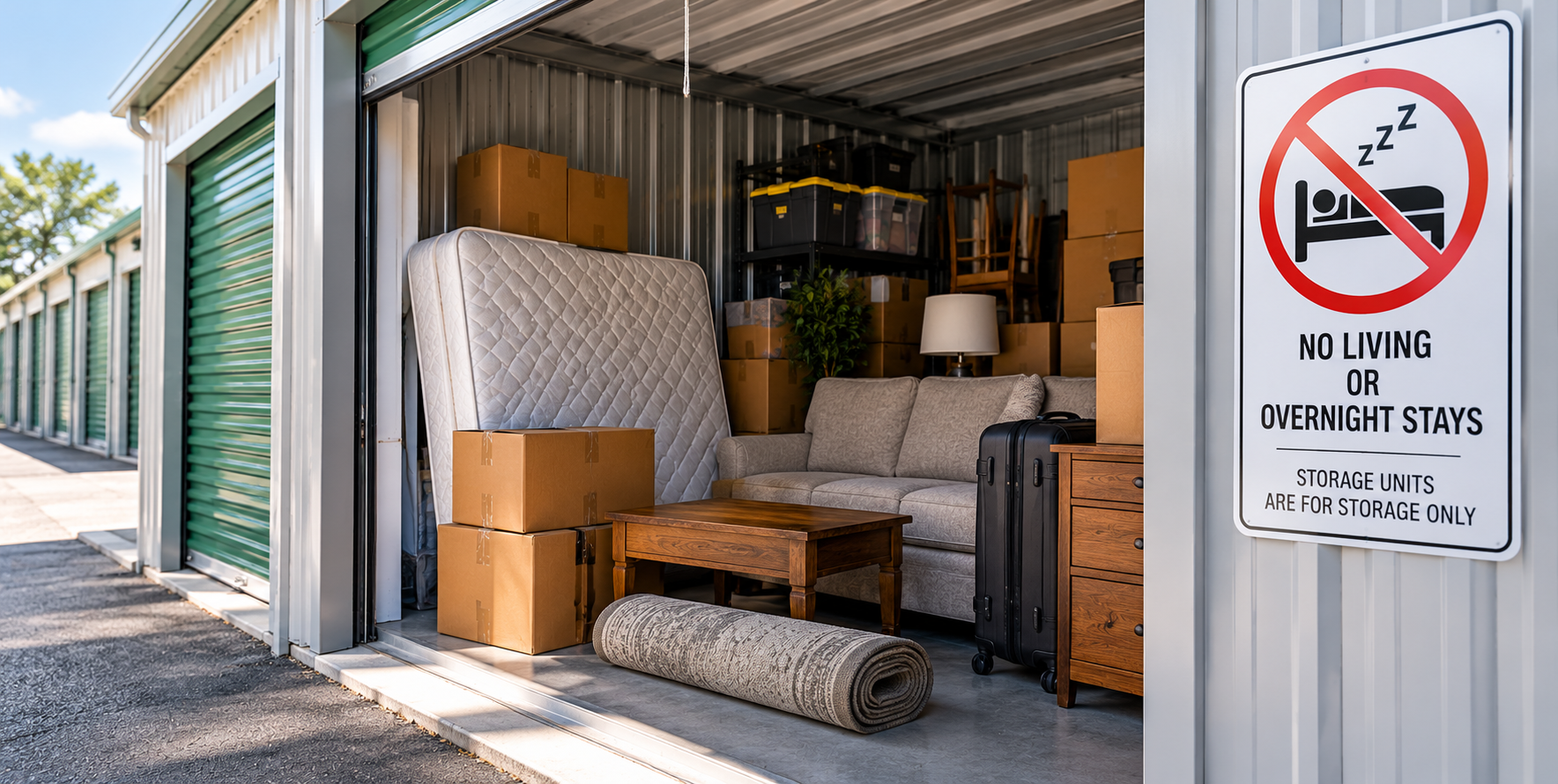
Self-storage buildings are generally occupied and regulated for storage uses rather than residential occupancy. Individual units normally lack the fire exits, plumbing, ventilation, bathrooms, cooking facilities, and other safeguards required for living space. Local zoning and building codes determine exactly how these uses are regulated, but a standard storage rental agreement almost always prohibits residential occupancy and overnight stays.
A facility's 24-hour access policy does not change that restriction. It means renters may be able to retrieve or store their belongings outside ordinary business hours, not that they can remain inside indefinitely. If you are unsure about an unusual property or mixed-use facility, ask the operator about the legally approved use rather than assuming a lockable room is a dwelling.
The health and safety risks are serious
Storage units may have limited ventilation, especially once a door is closed. Many doors are not designed to be opened from inside with the safeguards expected in a living space, which raises the risk of entrapment. Heating or cooking with fuel-burning equipment can produce deadly carbon monoxide or start a fire. Improvised electrical connections, extension cords, or heaters add further hazards and may violate the facility's rules.
Extreme temperatures are another concern. Non-climate-controlled units can become very hot or cold, and even climate-controlled units may operate at temperatures intended to protect stored belongings rather than keep occupants comfortable. There may be no restroom, drinking water, safe food storage, or reliable way to contact emergency services from inside.
What happens if someone is discovered living in a unit?
The consequences depend on the rental agreement and local law. A facility may terminate the rental, restrict access according to lawful procedures, require the occupant to leave, or involve emergency responders or authorities when there is a safety concern. It is important not to confuse a tenancy in a commercial storage unit with the rights that apply to a residential lease. Those legal categories can be very different.
If someone is already sleeping in a unit, personal safety should come first. Leaving the space and seeking a legitimate place to stay is safer than trying to hide an overnight presence from staff or cameras. A local housing counselor, social service agency, or community organization can help identify options appropriate to the situation.
Can you spend time inside a storage unit during the day?
Renters generally may enter a unit to load, unload, organize, and inspect permitted belongings during authorized access hours. That does not mean the unit can be used as an office, workshop, living room, or place to conduct activities the facility prohibits. Some facilities allow limited inventory work; others have strict rules against remaining on-site beyond normal storage tasks.
Review the lease and ask before planning any extended activity. The rules can differ for commercial storage spaces, warehouse suites, and traditional self-storage lockers. Even where a provider permits certain business activities, sleeping or living there is a different matter entirely.
Can you keep a mattress, bed, or personal belongings in storage?
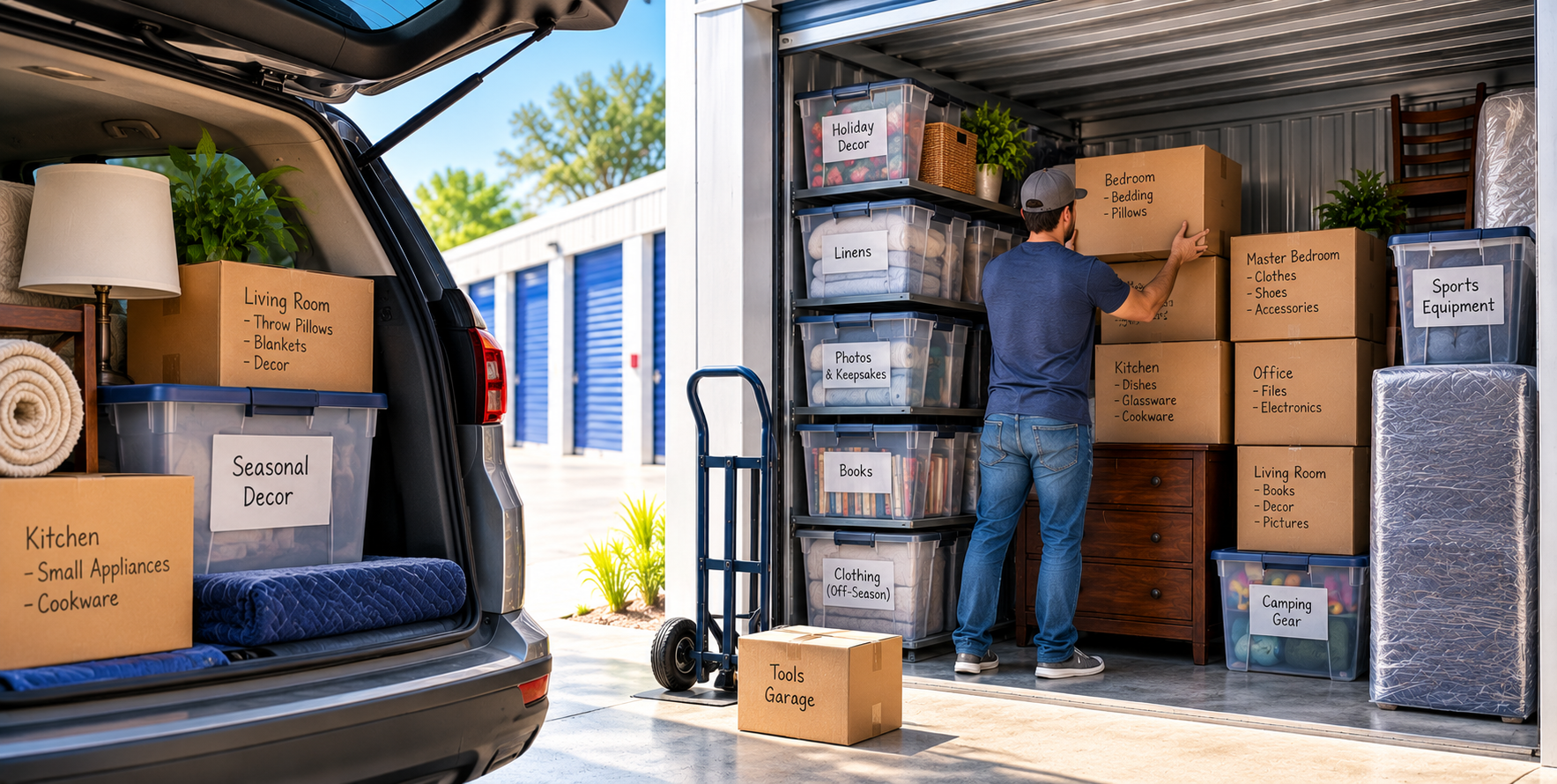
Yes, mattresses, furniture, boxes, and household items are commonly stored in conventional units when the operator permits them. You can rent a 5x10 storage unit for a bedroom's contents or a 10x10 unit for a larger portion of an apartment, depending on actual dimensions. What is prohibited is using those belongings to turn the storage space into a residence.
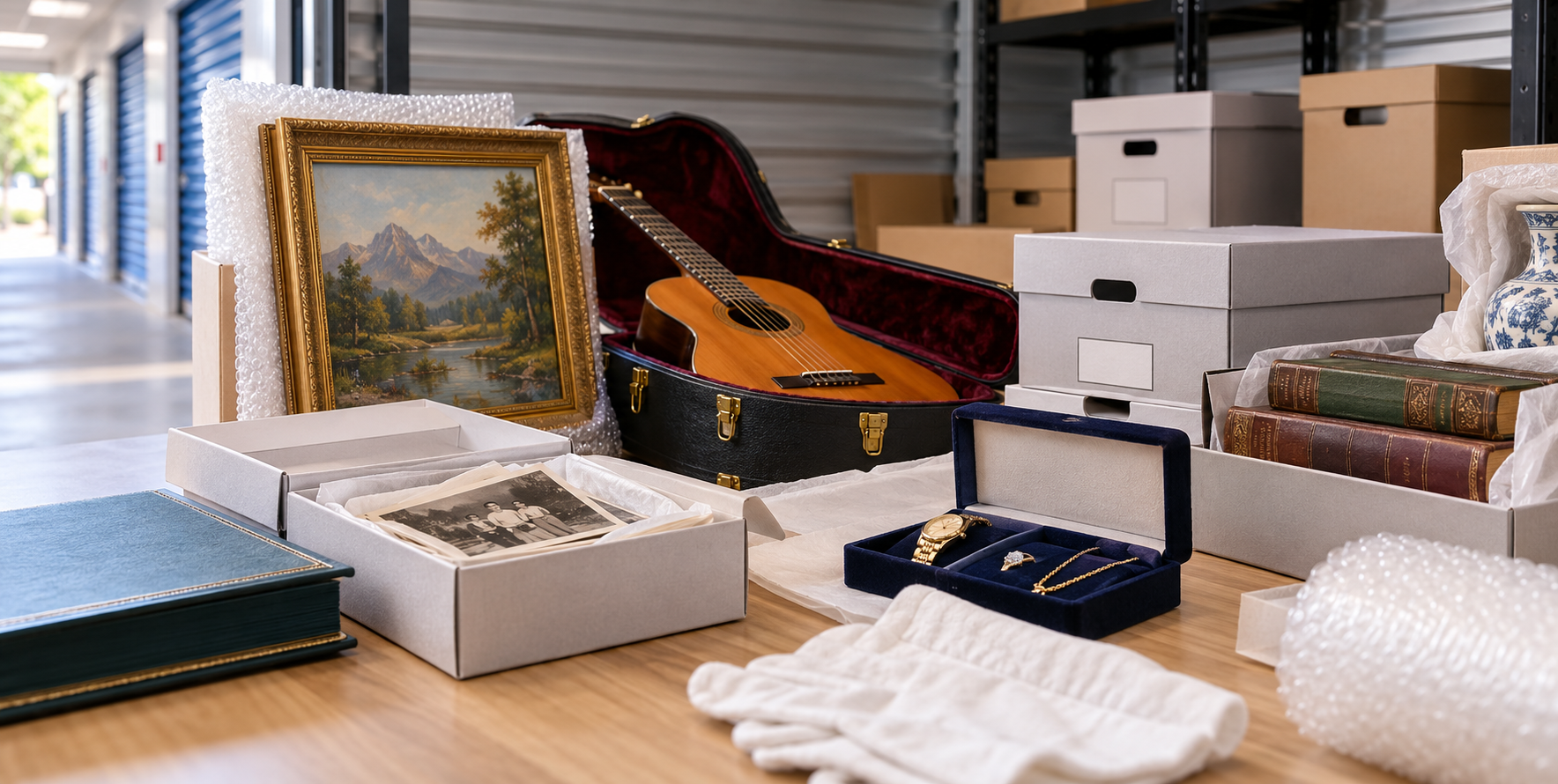
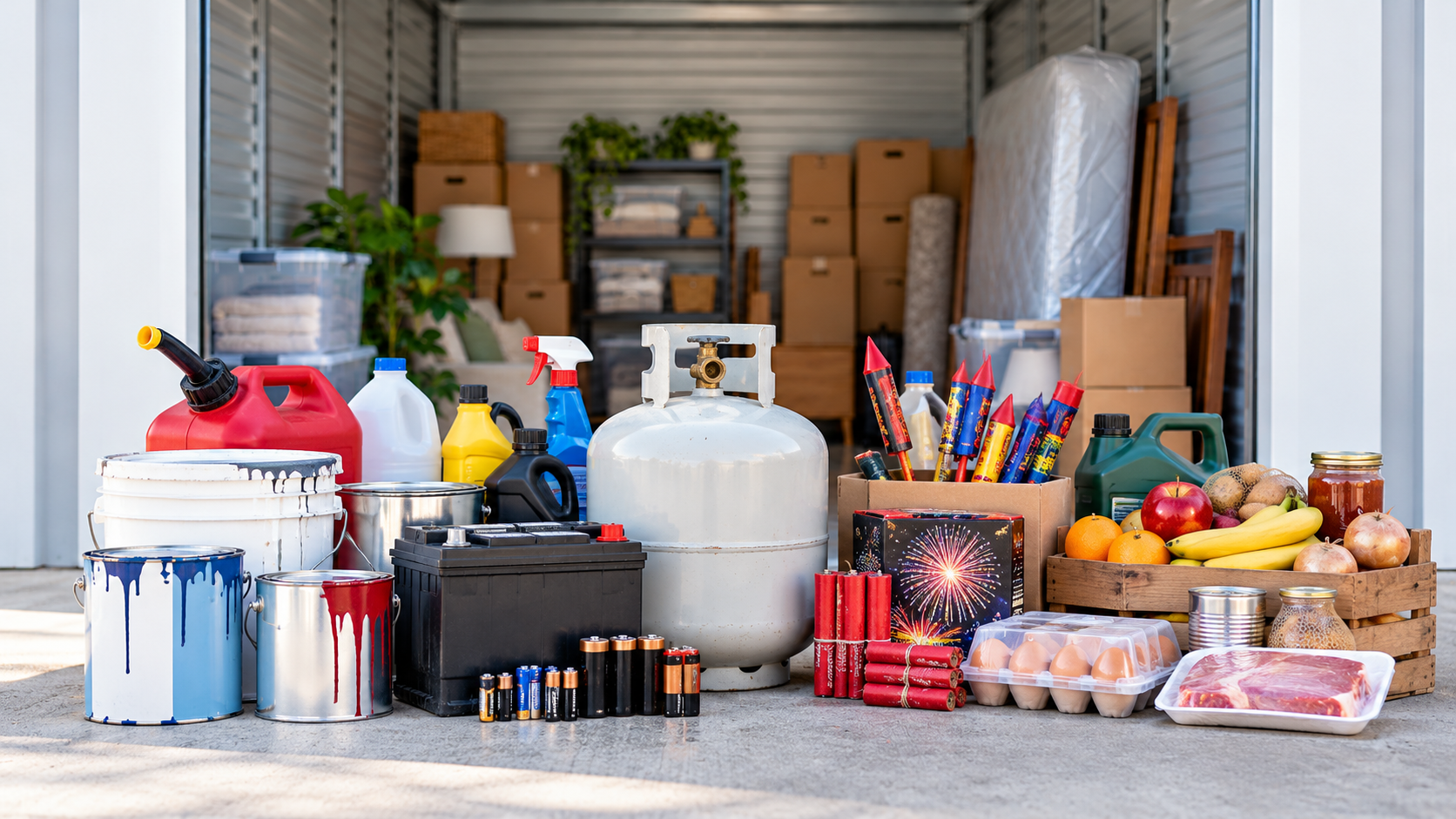
Make sure stored mattresses are clean, dry, protected with an appropriate cover, and positioned so they are not crushed. Avoid leaving food, flammable materials, or anything prohibited by the rental agreement. If you are temporarily between homes, consider pairing a legal place to sleep with a separate storage unit for possessions.
Better options when you need temporary housing
If a lease ends before your next home is ready, short-term sublets, extended-stay lodging, approved roommate arrangements, and local housing assistance may be worth exploring. Some communities offer emergency shelter services or transitional housing for people facing an immediate housing crisis. For local assistance in the United States, dialing 211 or visiting a local 211 service can help identify housing and social support resources where available.
Storage can still be part of a workable moving plan. Keeping furniture and nonessential belongings in a legitimate storage unit may reduce the amount you need to move into temporary accommodations. The Moving Tips Guide explains how to pack and schedule a move in stages so you can avoid repeatedly transporting the same boxes.
Using storage responsibly during a housing transition
Choose a unit close enough that you can retrieve clothes, documents, or equipment when needed, and pay attention to gate access hours and monthly costs. Keep essential items—identification, medication, valuables, work supplies, and enough clothing for daily use—out of long-term storage. If you will need frequent access, label boxes carefully and leave a walkway.
Read the billing rules and move-out notice requirements. Late fees, lockouts, and rate changes can complicate an already stressful transition, so consider the total cost and choose only the space you actually need. When your new home is ready, schedule moving help and inspect your belongings as they come out of storage.
Frequently Asked Questions
Can I live in a climate-controlled storage unit?
No. Climate control is meant to manage storage conditions for belongings; it does not provide the safety equipment, sanitation, or approved occupancy required for housing.
Can I sleep in my storage unit for one night?
Ordinary self-storage units are not approved or safe for sleeping, even for a single night. A one-time emergency does not make residential use part of the rental agreement.
Does 24-hour access mean overnight stays are allowed?
No. 24-hour storage access refers to authorized access to possessions, not permission to occupy the unit as a dwelling.
Can I use a storage unit as an office or workshop?
It depends on the facility, local law, and specific activity. Many traditional facilities prohibit conducting business on-site beyond basic loading or inventory tasks. Ask the operator and check the agreement before making plans.
What if I have nowhere to stay tonight?
Seek a lawful, safe overnight option through trusted contacts, local emergency housing organizations, or a 211 service where available. A storage unit can protect possessions while you arrange housing, but it is not a safe substitute for shelter.