How a Storage Unit Can Make Moving Easier
A move rarely happens all at once. Your current lease may end before the new home is ready, your closing date may change, or you may need time to decide where furniture belongs. A storage unit can give you breathing room by separating the job of transporting your belongings from the job of unpacking and settling in. Used thoughtfully, it can reduce clutter during the most difficult parts of a move.
The challenge is making sure storage simplifies your plan rather than adding another round of loading, mileage, and expense. Choosing the right size, location, and sequence of trips can make the difference.
Store things you will not need immediately
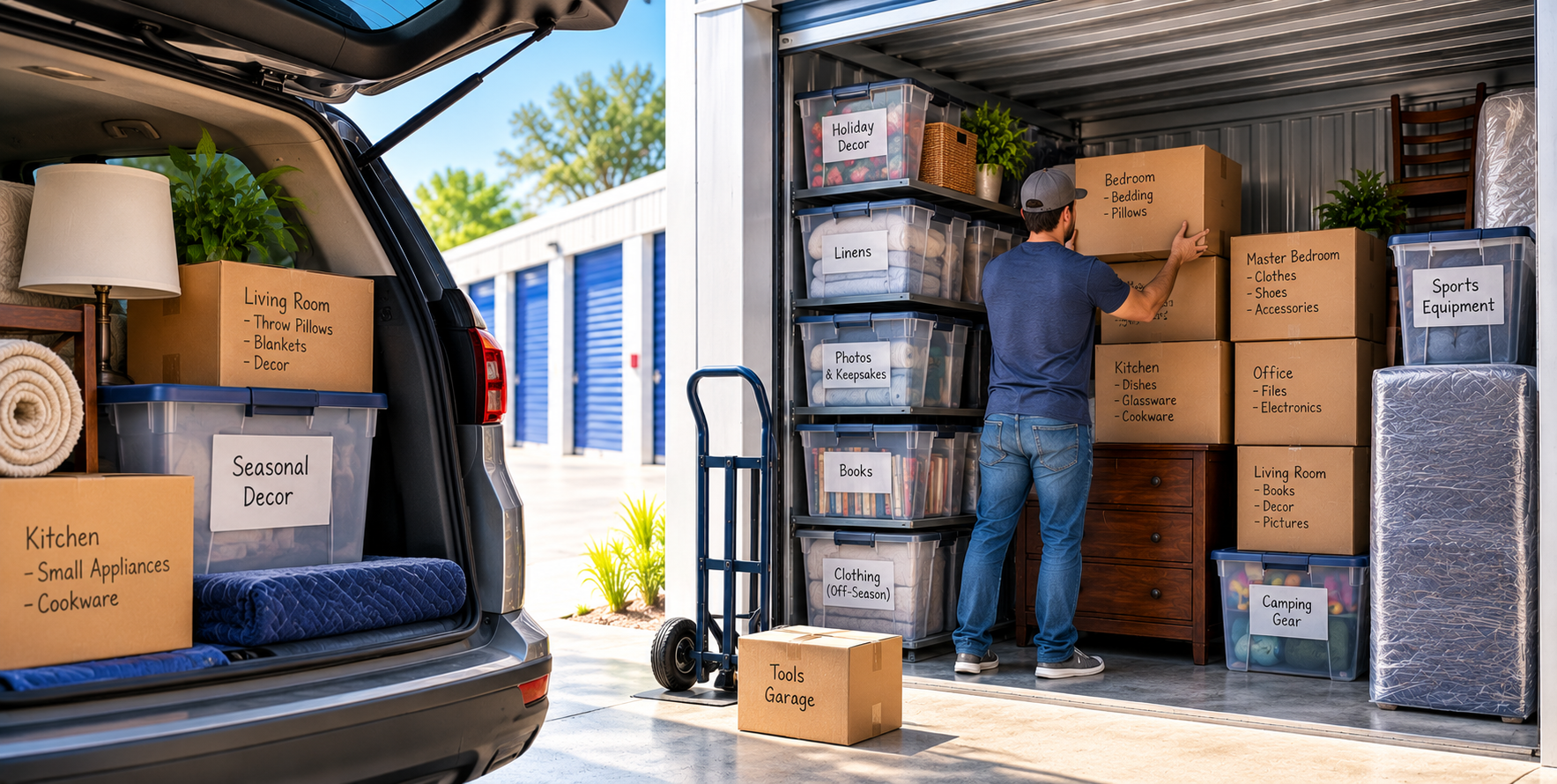
Begin with possessions that are easy to pack early: seasonal clothing, extra kitchenware, books, décor, spare furniture, and seldom-used equipment. Moving those items ahead of time opens floor space for sorting, cleaning, staging, and packing daily essentials. It can also make it easier to show a home for sale or manage a renovation while you remain there.
Keep a clearly labeled essentials group outside the unit. Identification, medication, work equipment, pet supplies, a few changes of clothes, basic cookware, and important paperwork should remain accessible during the move. The point is to reduce what you are carrying around each day, not bury something you need before you get the keys.
Use storage when move-out and move-in dates do not align
When a lease or sale closes before your next home is available, temporary storage can hold furniture while you use short-term accommodation. Instead of paying to move everything into a temporary apartment and then moving it again, you may be able to send large items directly to storage and retrieve them once the permanent home is ready. This can be especially useful when the gap is brief but unavoidable.
Calculate the whole cost before deciding. A storage unit adds rent and possible extra loading, truck time, and transport. Compare those expenses with other options, including changing your moving date, arranging temporary occupancy where legally possible, or using a mover that offers short-term storage. The least expensive solution depends on your schedule and inventory.
Make renovations and staging less complicated
Furniture and boxes can slow down painters, flooring crews, and other contractors. Moving nonessential items into a storage unit gives workers more room and reduces the chance of accidental impact or dust exposure. If you are selling a home, storing excess furniture can also make rooms feel less crowded without requiring you to sell possessions you still intend to use.
Do not store items that must remain available for contractors, such as approved materials, spare fixtures, or important tools, unless everyone knows where to find them. Maintain a list of what has gone to storage. During renovation projects, it is particularly easy for similar-looking cartons to be mistaken for trash or moved without being recorded.
Choose the right unit size for the move
A 5x10 unit may hold a bedroom's worth of furniture and boxes, while 10x10 or 10x15 units are common starting points for apartment or multiroom moves. Larger households may need 10x20 storage or more. These are rough planning examples; the dimensions of your sofa, mattress, appliances, and boxes determine actual fit.
Measure large items and check the unit's door opening, ceiling height, loading route, and access features. If you will need to retrieve belongings over several weeks, leave an aisle instead of filling the space wall to wall. A slightly larger unit can save time and prevent fragile boxes from becoming trapped behind furniture.
Pick a location that works with your route
The closest facility is not always the most convenient. Think about the direction of your move, traffic, loading-dock access, and how many trips you expect to make. A facility between your old and new homes may make more sense than one right beside the old address. Ask about gate hours, elevator access, cart availability, and whether large trucks can maneuver safely around the property.
Compare prices for the entire anticipated stay, including insurance or protection fees, administration charges, and the regular rate after any introductory offer. If your timeline might slip, avoid budgeting only for the absolute minimum number of rental periods.
Pack so unloading happens in the right order
Put items you will need last toward the back of the unit and items you expect to retrieve first near the entrance. Heavy and sturdy furniture can establish the layout, while fragile cartons need protected, stable positions. Label every box on at least two sides and keep an inventory. A photograph of the loaded unit can be useful when you need to remember where a particular item was placed.
Protect furniture properly, secure moving parts, and store only fully dry belongings. Never pile heavy boxes on delicate furniture to save floor space. For material-specific preparation, see the guides to Wood Furniture, Kitchenware, and Moving Supplies.
Decide whether to move yourself or hire help
A do-it-yourself move may give you flexibility for several short trips, but repeated lifting and driving can become exhausting. Professional movers may be more efficient for large furniture, stairs, or long distances. Before booking, clarify whether the mover can deliver to a storage facility, whether the facility allows the truck, and whether any wait time or multiple stops add to the quote.
If you use a rental truck, estimate loading volume and ask about mileage, fuel, vehicle return locations, and protective equipment. The Moving Truck Rentals Guide explains what to compare so transport costs do not surprise you.
Unload in stages after you get the keys
Move essentials into the new home first, then large furniture, then less urgent cartons and seasonal possessions. This approach allows you to arrange rooms before crowding them with boxes. Use your inventory to decide which storage containers can wait until the home is organized. A storage unit is especially useful if you want to paint or clean the new rooms before bringing in everything.
When the storage unit is empty, inspect it, remove your lock and all belongings, photograph its condition, and follow the operator's move-out procedure. Do not assume stopping visits or removing the last box automatically closes the account.
Frequently asked questions about using storage during a move
Is renting a storage unit worth it for a short move?
It can be when move-in dates do not align or you need room to renovate or stage a property. Compare rent and transportation costs with alternative moving schedules before deciding.
What should I move into storage first?
Start with nonessential, easily boxed belongings and furniture you can live without. Keep identification, medications, important documents, work supplies, and a first-night kit with you.
Can movers deliver directly to a storage unit?
Often yes, but confirm the moving company's service terms and the storage facility's truck access, loading areas, gate hours, and elevator availability.
How do I avoid paying for an extra month of storage?
Know the facility's billing cycle and required move-out notice. Schedule retrieval and account closure with enough time to meet those terms.
Related guides: Moving Tips, and Storage Unit Size Guide.